
What Are Domestic Water Filters — And Which One Do You Need?
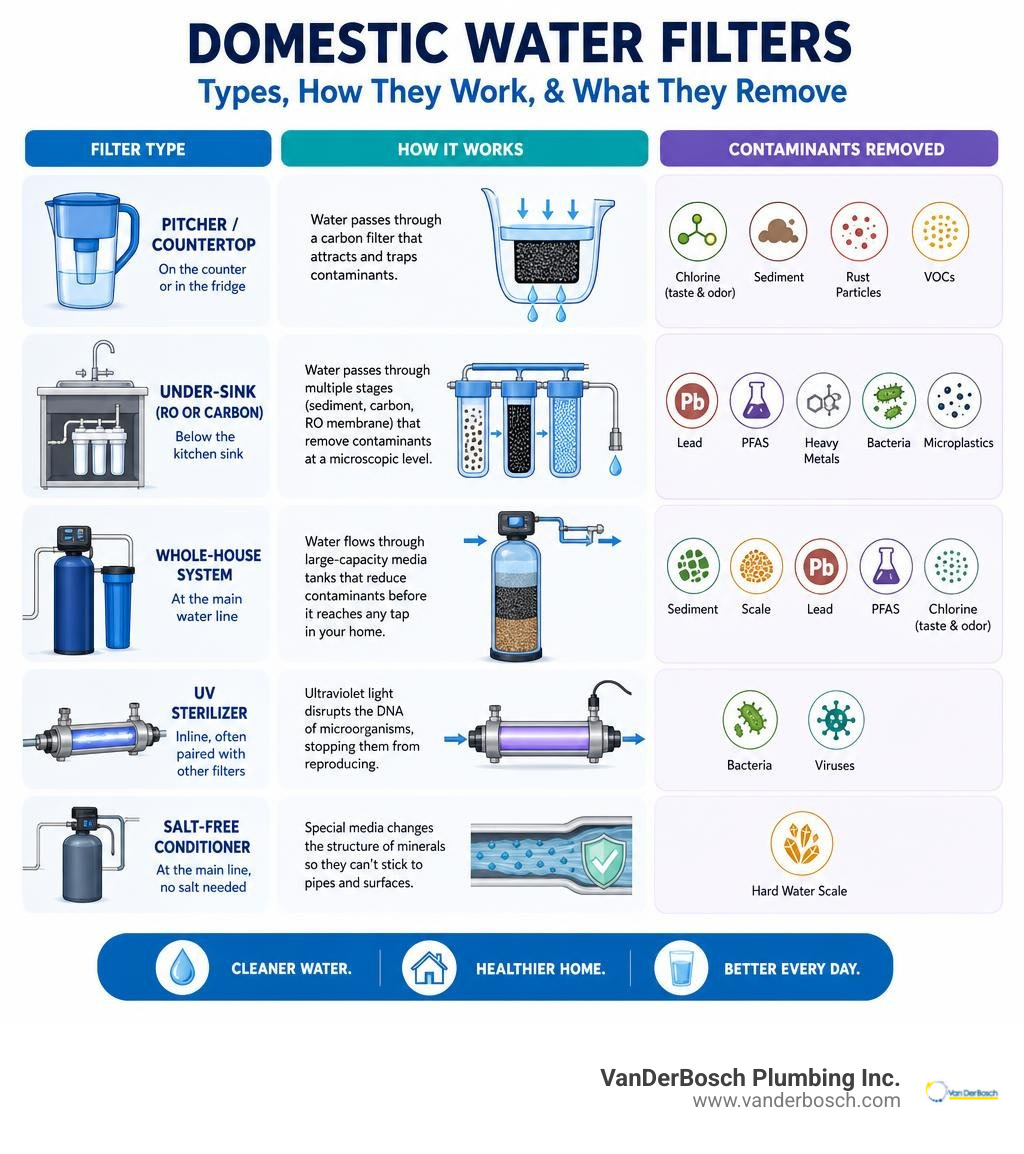
| Filter Type | Best For | Where It’s Installed |
|---|---|---|
| Pitcher / countertop | Basic chlorine and taste issues | On the counter or in the fridge |
| Under-sink (RO or carbon) | Lead, PFAS, heavy metals | Below the kitchen sink |
| Whole-house system | All taps, appliances, and showers | At the main water line |
| UV sterilizer | Bacteria and viruses | Inline, often paired with other filters |
| Salt-free conditioner | Hard water scale | At the main line, no salt needed |
The right system depends on your water source (city or well), the contaminants you want to remove, your household size, and your budget.
Tap water in the Chicagoland area isn’t always as clean as it looks. Chlorine taste, aging lead pipes, PFAS contamination, and hard water scale are real concerns for many homeowners — and bottled water is an expensive, wasteful workaround. Whether your water comes from a municipal supply or a private well, a properly matched filtration system can make a genuine difference in water quality, appliance longevity, and daily comfort.
I’m Hugh Hodur, President of VanDerBosch Plumbing Inc., and I’ve spent years helping Chicagoland homeowners solve exactly these kinds of water quality problems alongside our broader plumbing and water system services — including advising on and installing domestic water filters suited to each home’s specific needs. In this guide, I’ll walk you through everything you need to know to make a confident, informed choice.
Know your domestic water filters terms:
Why Installing Domestic Water Filters is Essential for Your Home
While municipal water treatment plants do a fantastic job of meeting federal safety baselines, the journey your water takes from the treatment facility to your kitchen tap can introduce a host of unwanted elements. Furthermore, the chemicals used to treat city water—primarily chlorine and chloramines—can leave your tap water smelling and tasting like a swimming pool.
Installing domestic water filters is one of the most effective steps you can take to upgrade your home’s health and comfort. Beyond making your morning coffee taste like it actually came from a high-end cafe, home filtration addresses several hidden issues that affect your daily life:
- Contaminant and Chemical Reduction: From heavy metals like lead to modern industrial runoff like PFAS (per- and polyfluoroalkyl substances), filtration systems act as a reliable barrier, ensuring these compounds never make it into your drinking glass.
- Plumbing and Appliance Protection: Sediment, rust, and mineral scale can wreak havoc on your plumbing infrastructure. Over time, particulate buildup clogs pipe valves, ruins showerheads, and drastically shortens the lifespan of water-using appliances. If you have recently invested in a high-efficiency tankless water heater, protecting it from scale and sediment is absolutely critical to avoid premature element failure.
- Skin and Hair Health: Bathing in heavily chlorinated water strips the natural oils from your skin and hair, often exacerbating conditions like eczema, dandruff, and chronic dry skin. Removing chlorine at the entry point of your home results in noticeably softer hair and smoother skin.
To truly understand why these systems have transitioned from luxury upgrades to household necessities, it helps to explore the foundational reasons Why Water Filtration Systems Are Important for modern properties.
Point-of-Use Domestic Water Filters for Targeted Cleanliness
If your primary goal is securing pristine, delicious water specifically for drinking and cooking, point-of-use (POU) systems are an incredibly practical and cost-effective route. These systems filter water right at the spot where you consume it, meaning you don’t spend money filtering the water used to flush your toilets or water your lawn.
The most common POU systems include:
- Countertop Pitchers: Pitchers like the LifeStraw Home 7-Cup Water Filter Pitcher | LifeStraw Water Filters & Purifiers are highly popular for renters or those on a budget. Unlike basic pitchers that only tackle chlorine, advanced models utilize dual-stage filtration—combining a membrane microfilter with an activated carbon block—to remove 99.999999% of bacteria, 99.999% of parasites, microplastics, and over 99% of PFAS.
- Under-Sink Systems: Installed out of sight beneath your kitchen counter, under-sink units provide a dedicated faucet with high-flow filtration. You can opt for multi-stage carbon systems, ultrafiltration units, or high-capacity reverse osmosis (RO) systems. For example, the Waterdrop Home RO System | 1600 GPD, Stainless Faucet delivers an exceptional flow rate (filling a 6oz cup in just two seconds) while filtering down to 0.0001 microns to eliminate lead, fluoride, and heavy metals. Other tankless under-sink options, such as the Klarstein PureLine Undersink Reverse Osmosis Water Filter 400GPD Black , offer compact space-saving profiles with real-time water quality monitoring.
Whole-House Systems for Comprehensive Home Protection
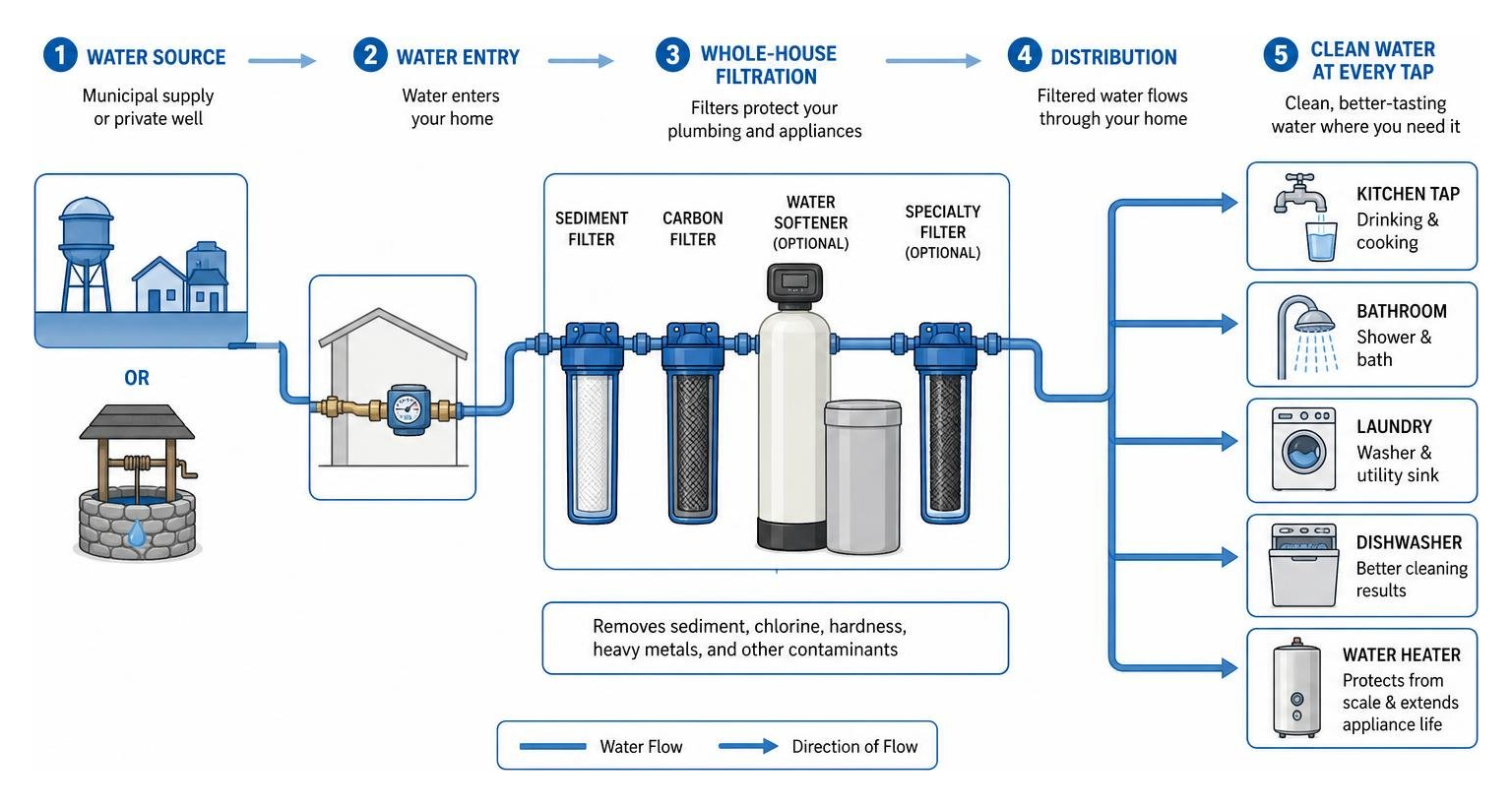
While point-of-use filters are fantastic for your drinking glass, they do nothing to protect your plumbing, water heater, washing machine, or showerheads. That is where whole-house systems (also known as point-of-entry, or POE, systems) come in.
Installed directly on your home’s main water line, a whole-house system filters every single drop of water entering your property. If you choose a robust system like those detailed in The Best Whole House Water Filtration and Softener System, you can enjoy the peace of mind that comes with clean water from every single tap.
Whole-house systems are built to handle serious volume. High-quality systems can filter up to 14+ gallons per minute, ensuring that even if someone is running the washing machine, washing dishes, and showering simultaneously, there is no drop in water pressure. Heavy-duty options like the Whole House Water Filters & Filtration Systems – Aquasana can reliably reduce up to 97% of chlorine and other chemical contaminants for up to 1,000,000 gallons—or roughly 10 years of worry-free operation for a typical household.
Comparing Filtration Technologies: RO, Carbon, Ultrafiltration, and Scale Control
Choosing the right water filter requires a basic understanding of the technologies under the hood. No single filtration method removes every single type of impurity, which is why many premium systems combine multiple technologies into a single unit.
| Technology | Pore Size (Microns) | Primary Contaminants Removed | Maintenance Required | Water Waste |
|---|---|---|---|---|
| Reverse Osmosis (RO) | 0.0001 | Dissolved solids, heavy metals, fluoride, lead, PFAS | Replace pre/post filters annually, membrane every 2 years | Yes (typical 3:1 to 2:1 ratio) |
| Ultrafiltration (UF) | 0.01 to 0.02 | Suspended solids, bacteria, parasites, microplastics | Replace carbon blocks annually, membrane every 3 years | No (zero waste) |
| Activated Carbon | 0.5 to 10 | Chlorine, VOCs, bad taste, odors, select heavy metals | Replace cartridges every 6 to 12 months | No (zero waste) |
| Salt-Free Conditioning | N/A (Physical) | Hard water scale buildup (calcium/magnesium alteration) | Replace media or cartridges depending on system specs | No (zero waste) |
Reverse Osmosis and Ultrafiltration Performance
Reverse osmosis and ultrafiltration are the heavyweight champions of physical filtration, but they operate quite differently when it comes to water chemistry and flow rate.
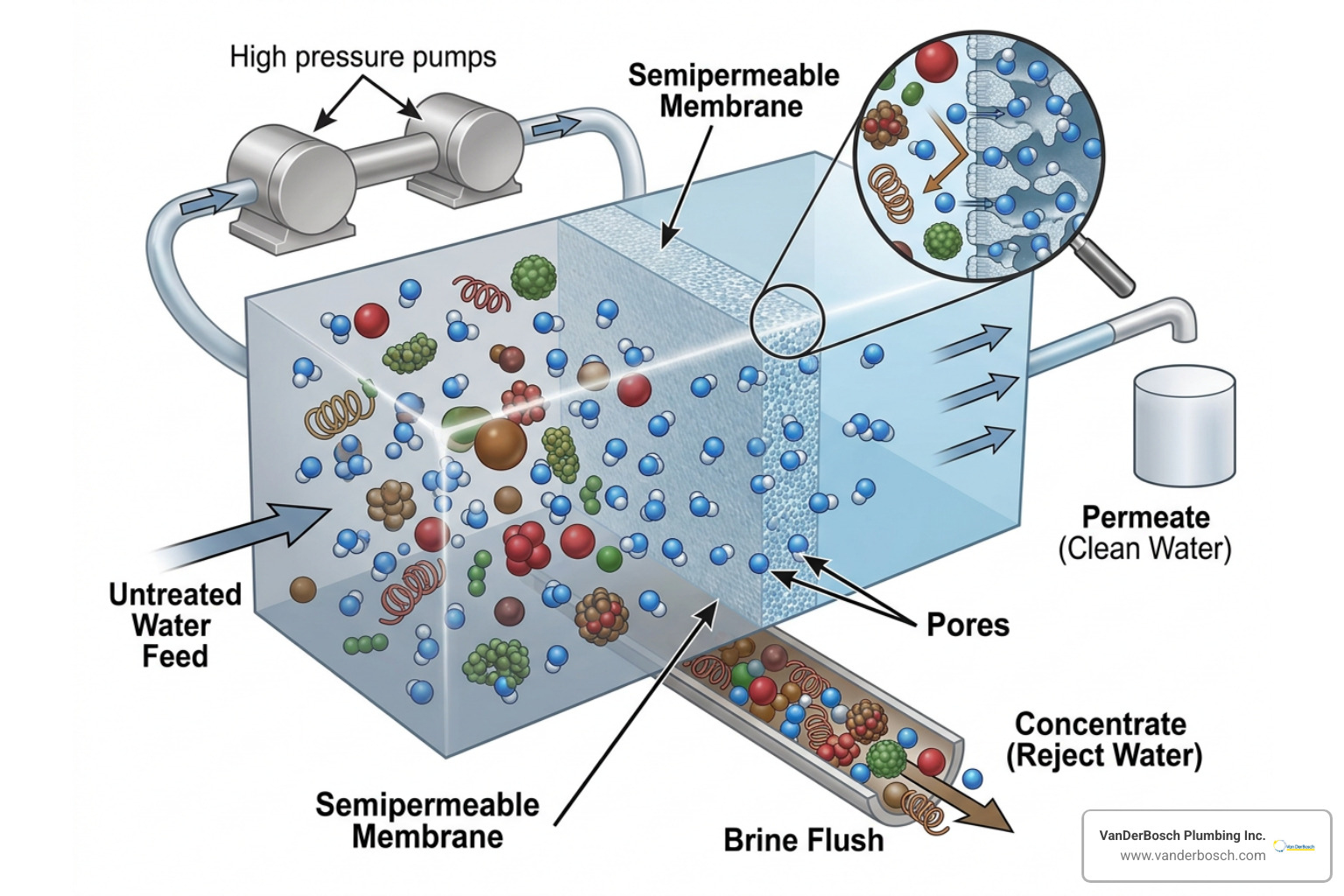
Reverse osmosis forces water through a semipermeable membrane with microscopic pores measuring 0.0001 microns. This is so fine that it strips away up to 99% of all dissolved solids, including heavy metals, nitrates, fluoride, and salts. However, because the filtration is so tight, RO systems produce “wastewater” that is flushed down the drain to keep the membrane clean.
Furthermore, RO strips out healthy minerals like calcium and magnesium, which can leave water tasting slightly flat. To solve this, premium systems like the Waterdrop X16-S feature integrated remineralization stages to restore these minerals and bring the pH back to a perfectly balanced 7.5.
Ultrafiltration (UF), on the other hand, uses hollow fiber membranes with a pore size of roughly 0.01 microns. This is incredibly effective at removing sediment, microplastics, bacteria, and cysts without wasting a single drop of water. Because UF does not filter down to the dissolved ionic level, it leaves beneficial minerals completely intact.
Systems like the PureDrop CUW4 Under Sink Ultrafiltration System offer a fantastic, high-flow, tankless alternative for homeowners who want clean, microplastic-free drinking water but do not need to reduce overall dissolved solids (TDS) or remove fluoride.
Carbon Filtration and Salt-Free Conditioning
Activated carbon remains the gold standard for chemical removal. Operating through a process called adsorption, carbon filters act like a chemical sponge, trapping organic compounds, chlorine, chloramines, pesticides, and volatile organic compounds (VOCs) within their highly porous structure. Carbon blocks (which compress carbon into a solid form) are generally far more effective than granular activated carbon (GAC) because they force water to contact more surface area, preventing contaminants from slipping through.
When dealing with hard water—a very common issue across Cook County—traditional salt-based softeners have historically been the default. However, many modern homeowners prefer salt-free water conditioning. Instead of removing calcium and magnesium through ion exchange (which adds sodium to your water), salt-free conditioners physically alter the structure of these minerals.
Using technologies like Template Assisted Crystallization (TAC), systems like the ECO-X 7-Stage Municipal Water Filtration and Salt-Free Conditioning System in Black (Treats up to 3 Bathrooms) prevent scale minerals from binding to your pipes and heating elements without stripping the minerals or discharging salty wastewater into our local environment.
To keep these systems running smoothly, pairing them with heavy-duty pre-filters is highly recommended. You can learn how to protect your primary filtration media in our guide on how to Clear the Way with These 20-Inch Sediment Filters.
City Water vs. Well Water: Choosing the Right System for Your Source
The geographic region you live in dictates the chemical makeup of your water. In Chicagoland, our water challenges vary wildly depending on whether we rely on municipal Lake Michigan water or a private deep well.
Addressing Municipal Contaminants and Lead Concerns
If you live in Chicago, Niles, Winnetka, Melrose Park, or Ukrainian Village, your water is sourced from Lake Michigan and treated by municipal plants. While this water is highly treated, it travels through miles of aging distribution infrastructure.
Lead contamination is a major concern in older areas of Chicago and Cook County due to the historical use of lead service lines. According to the Water – Lead-Safe Chicago guidelines, flushing your taps and using certified filtration are critical steps to protect your family from lead exposure.
Additionally, municipal water is treated with chlorine or chloramines to prevent bacterial growth. While necessary for public health, these disinfectants react with organic matter to create harmful disinfection by-products (DBPs) like trihalomethanes.
Furthermore, synthetic industrial chemicals like PFAS have been detected in many municipal systems. For instance, looking at Is Melrose Park, IL Tap Water Safe? PFAS & Quality (2026) reports highlights the ongoing necessity of active carbon and RO systems to strip out these persistent “forever chemicals” before they reach your glass.
Even in historically well-maintained municipal systems, such as those discussed in the History of Winnetka’s Water Plant or documented in the Water Dept. Frequently Asked Questions | Oakbrook Terrace, IL , local infrastructure age can still introduce rust, sediment, and trace metals into your home’s private plumbing.
Managing Well Water Issues and Hardness
For homeowners in unincorporated parts of Northeast Illinois, or those utilizing private wells in suburbs like Roselle, the water challenges are completely different. Well water is completely untreated by municipal facilities, meaning the homeowner is solely responsible for its safety.
Common well water issues include:
- Iron and Manganese: These minerals leave ugly red, orange, or black stains on sinks, toilets, and laundry, and give water a metallic taste.
- Hydrogen Sulfide: This gas is responsible for the highly unpleasant “rotten egg” smell that can make showering or pouring a glass of water unbearable.
- Hardness: Deep well water in Northeast Illinois passes through thick limestone deposits, loading it with calcium and magnesium that cause severe scale buildup.
- Microbial Risks: Private wells are susceptible to bacterial contamination from agricultural runoff or failing septic systems.
If you are dealing with well-water issues, standard city carbon filters will not cut it. You will need targeted solutions, such as specialized iron oxidation systems, UV sterilizers to kill pathogens, and dedicated well filtration. If you are tired of that distinct sulfur odor, we highly recommend reading our guide on How to Choose the Best Sulfur Filter for Well Water Without the Stink.
For residents in Roselle dealing with these specific well-water dynamics, local support is invaluable. You can find tailored regional insights on our Roselle – Water Filtration System service page or consult local specialists at Whole House Water Filters | Roselle, IL to diagnose regional soil and aquifer characteristics.
Key Factors to Consider When Selecting a System
Investing in a water filtration system isn’t a one-size-fits-all process. To ensure you don’t end up with a system that restricts your water pressure or requires constant, expensive filter changes, you must evaluate several practical factors. Our comprehensive resource, The Complete Guide to Water Filtration Systems, provides an excellent starting point for outlining these design parameters.
How to Choose the Best Domestic Water Filters for Your Household
Before clicking “add to cart” on any filtration system, ask yourself these essential questions:
- What is my daily water usage and household size? A home with four bathrooms and a large family requires a whole-house system with a high flow rate (at least 12 to 15 GPM) to prevent pressure drops. Conversely, a single professional in a high-rise condo might be perfectly served by a high-end under-sink RO system.
- What does my water test say? Never guess what is in your water. Get a certified water quality report or order a comprehensive testing kit. If your water has zero lead or PFAS but incredibly high iron, your filtration choices will look very different.
- Is the system certified? Look for systems independently tested and certified by the National Sanitation Foundation (NSF) or the Water Quality Association (WQA).
Important certifications include:
- NSF/ANSI 42: Covers aesthetic effects (chlorine, taste, odor).
- NSF/ANSI 53: Covers health effects (lead, heavy metals, VOCs, PFAS).
- NSF/ANSI 58: Specifically covers reverse osmosis systems.
- NSF P231 / EPA Standard: Verifies microbiological purification (bacteria and parasites), which is crucial for emergency gravity filters like the Patriot Pure Ultimate Water Filtration System | 4Patriots .
Maintenance, Monitoring, and Long-Term Ownership Costs
The initial purchase price of a water filter is only part of the financial equation. To avoid “buyer’s remorse,” calculate the annual operating costs of replacement filters.
Some systems use affordable, generic cartridges, while others require proprietary, multi-stage filter replacements that can cost upwards of $150 to $200 per year. Fortunately, many modern systems feature smart monitoring tools, such as built-in TDS (Total Dissolved Solids) meters, LED filter change indicators, and automated shut-off valves that take the guesswork out of maintenance schedules.
Keeping a strict replacement schedule is vital. A saturated carbon filter can actually begin releasing trapped contaminants back into your water supply, rendering the system counterproductive.
Frequently Asked Questions about Home Water Filtration
What is the difference between a water filter and a water softener?
A water filter is designed to remove chemical contaminants, heavy metals, sediment, and biological pathogens to make your water safer and better tasting. A water softener specifically targets hard water minerals (calcium and magnesium) using ion exchange to replace them with sodium ions, preventing scale buildup in your pipes and appliances. While a softener protects your plumbing, it does not filter out chemicals like chlorine, lead, or PFAS. Many homes benefit from combining both systems.
How often do I need to replace my water filters?
Replacement schedules depend heavily on your local water quality and the type of filter:
- Sediment pre-filters: Every 3 to 6 months.
- Activated carbon blocks: Every 6 to 12 months.
- Reverse osmosis membranes: Every 2 years.
- Ultrafiltration membranes: Every 3 years.
- Gravity/Pitcher filters: Varies widely (from 40 gallons for basic carbon pitchers up to 264 gallons for advanced dual-stage microfilters).
Can a domestic water filter remove PFAS and lead?
Yes, but only if the system is specifically certified to do so. Look for filters certified under NSF/ANSI Standard 53 for lead reduction and NSF Standard P473 or NSF 53 (specifically listing PFOA/PFOS) for PFAS removal. Standard, low-cost carbon pitchers will not reliably remove these contaminants; you will need multi-stage carbon blocks, ultrafiltration, or reverse osmosis systems designed for heavy metal and chemical extraction.
Conclusion
Upgrading your home with high-quality domestic water filters is an investment in your family’s health, your plumbing system’s longevity, and your overall quality of life. From targeted under-sink reverse osmosis systems to comprehensive whole-house protection, the right system ensures you never have to worry about what is coming out of your tap.
At VanDerBosch Plumbing Inc., we have been serving the Chicagoland community across Cook County, Roselle, Niles, Winnetka, Elmhurst, and Mount Prospect with licensed, professional expertise for decades. We pride ourselves on transparent pricing with absolutely no hidden service charges, 24/7 availability for emergency needs, and background-checked technicians who get the job done right the first time. We back all of our work with a 100% satisfaction guarantee.
If you are ready to give your tap water the ultimate glow up, contact us today to Schedule a Water Filtration System Consultation and take the first step toward clean, refreshing water from every tap.