
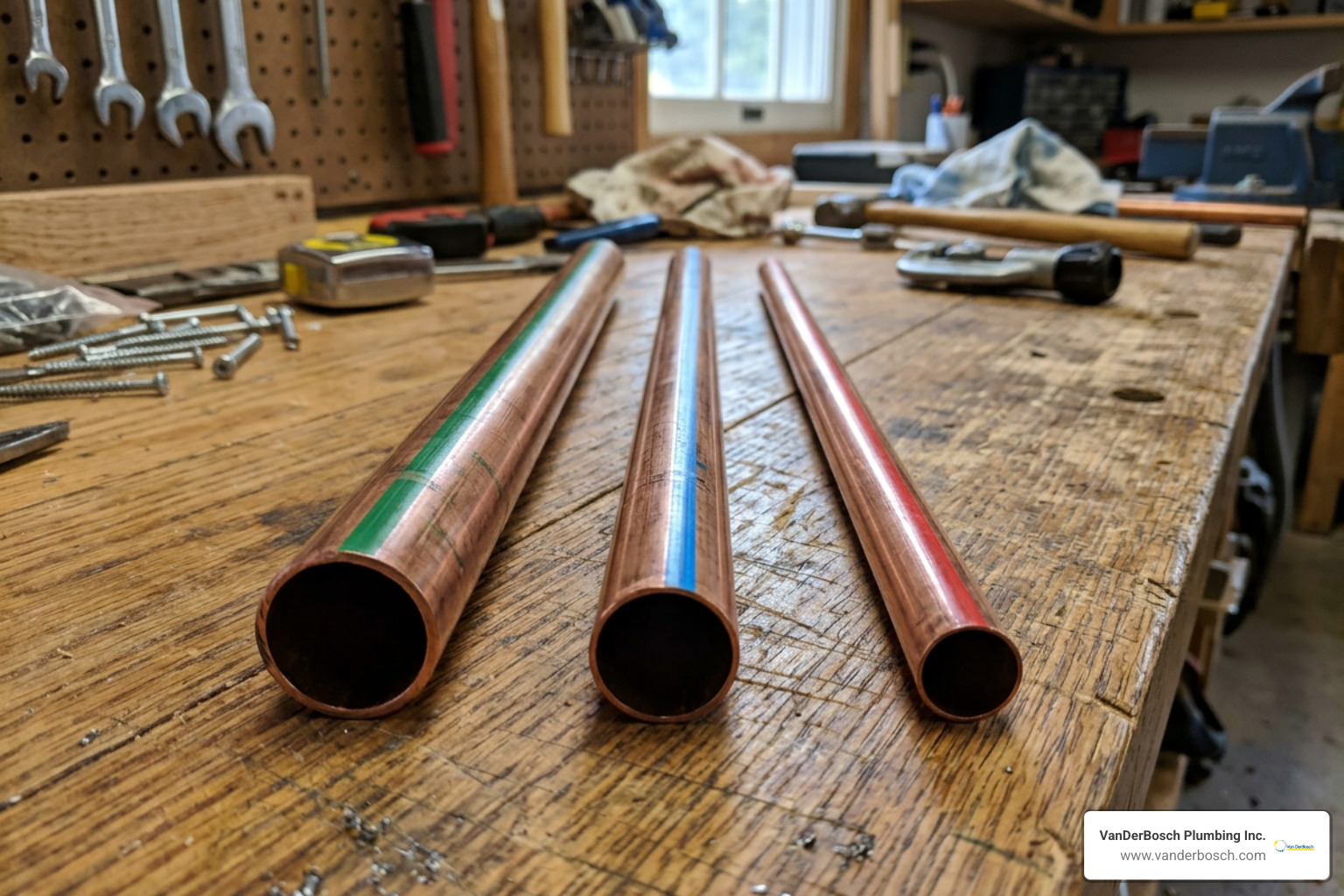
Understanding Copper Water Line Types, Sizing, and Specifications
When selecting a copper water line, understanding how copper pipe is sized and specified ensures you pick the right material for the job. Standard plumbing copper tube used across North America must contain at least 99.9% pure copper (often deoxidized with phosphorus, classified as UNS C12200). These materials conform to strict standards such as COPPER TUBE FOR PLUMBING AND MECHANICAL APPLICATIONS and ASTM B88.
In copper plumbing, pipe size is described using Nominal Pipe Size (NPS). A critical rule to remember: for standard plumbing copper (Types K, L, and M), the actual outside diameter (OD) is always 1/8-inch larger than its nominal size. For example, a 3/4-inch nominal copper pipe always measures 7/8-inch on the outside diameter.
Copper’s high tensile strength allows thin pipe walls to withstand substantial hydraulic pressure, while its natural ductility allows soft temper coils to bend around obstacles without cracking.
Type K, L, M, and DWV Wall Thickness Differences
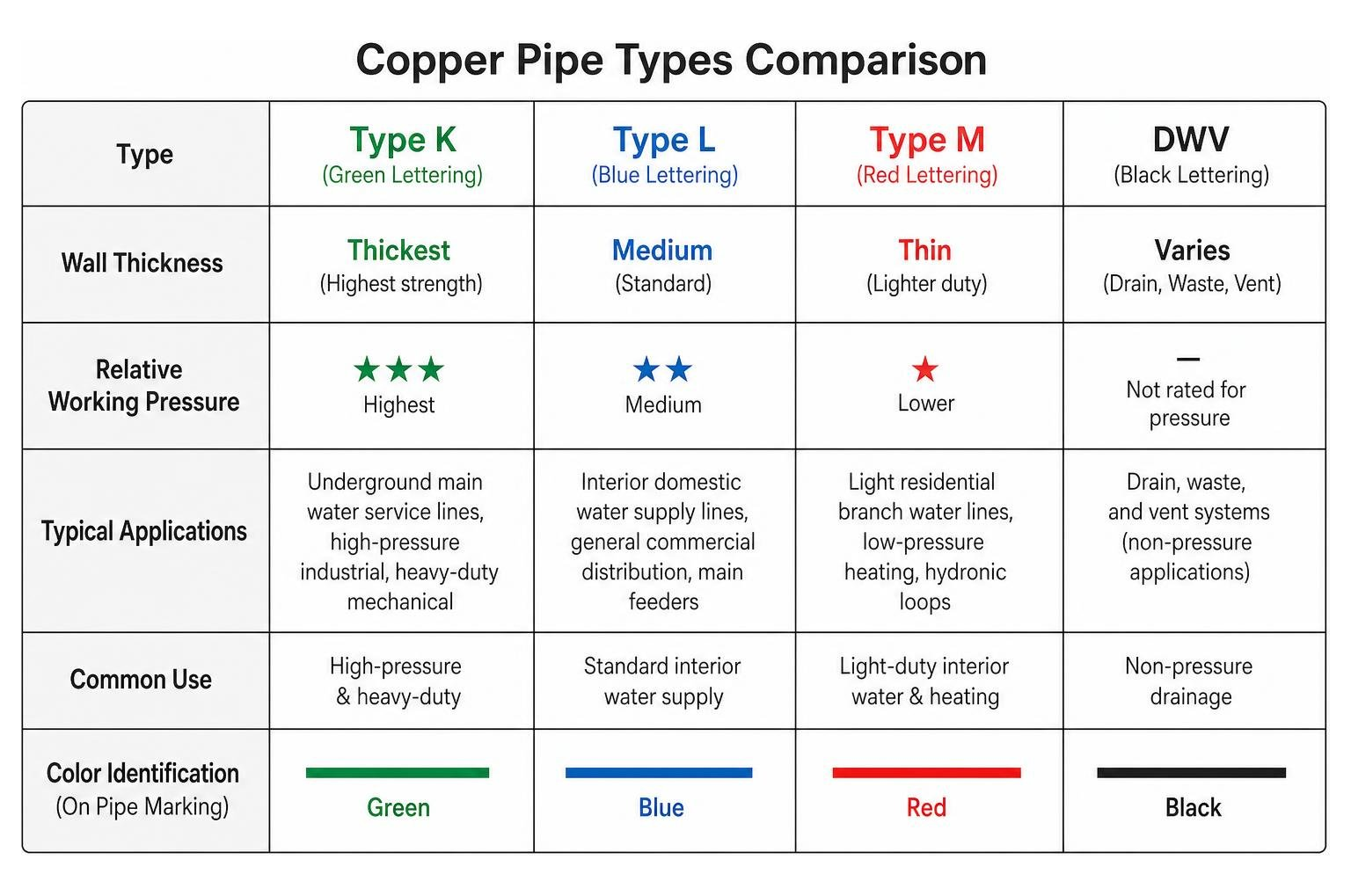
While the outside diameter for a given nominal size remains constant across standard copper pipes, wall thickness varies significantly depending on the pipe type. Manufacturers print continuous color-coded lettering on the pipe to make identification simple:
- Type K (Green Lettering): Features the thickest wall and the highest allowable working pressure. It is used primarily for underground main water service lines, high-pressure industrial applications, and heavy-duty mechanical setups.
- Type L (Blue Lettering): The standard recommendation for interior domestic water supply lines and general commercial distribution. A 1 in. x 5 ft. Copper Type L Pipe is frequently used for indoor main feeders before branching off.
- Type M (Red Lettering): Features a thinner wall than Type L. It is approved for light residential branch water lines, low-pressure heating systems, and hydronic heating loops, making it a popular budget-friendly interior option.
- DWV (Yellow or Orange Lettering): Has the thinnest wall of all and is strictly rated for non-pressurized Drain, Waste, and Vent systems. It should never be used for pressurized drinking water service.
Velocity Limits, Pressure Loss, and Pipe Dimensions
To prevent premature wear on a copper water line, fluid velocity must be kept within safe operating thresholds. When water flows too quickly through copper tubing, it can strip away the protective internal oxide layer—a problem known as erosion-corrosion.
Industry guidelines set clear velocity limits:
- Cold water lines: Keep flow speeds under 8 feet per second (fps).
- Hot water lines (up to 140°F): Keep flow speeds under 5 fps.
- Hot water lines over 140°F or circulating return loops: Keep flow speeds under 2 to 3 fps.
System designers must also account for static head pressure loss due to elevation. Water loses 0.434 psi of pressure for every vertical foot it climbs. When cutting copper pipe, always ream and deburr the inside edge thoroughly. Leaving a sharp internal burr creates localized turbulence that easily triggers high-velocity erosion-corrosion over time.
Comparing Copper Against PEX and CPVC Plumbing Systems
Choosing the right plumbing material requires balancing performance, durability, and project budget. When evaluating whether Do You Need Repiping?, comparing copper to modern plastic alternatives like PEX (cross-linked polyethylene) and CPVC (chlorinated polyvinyl chloride) highlights clear trade-offs:
| Material Feature | Copper | PEX | CPVC |
|---|---|---|---|
| Average Lifespan | 50 to 70+ years | 40 to 50 years | 25 to 40 years |
| Material & Installation Cost | High | Low | Moderate |
| Fire Rating & Safety | Non-combustible (no toxic fumes) | Combustible | Combustible (melts/chars) |
| UV Resistance | Indefinite (unaffected by light) | Poor (degrades in days/weeks) | Moderate (becomes brittle) |
| Freeze Tolerance | Moderate (ductile, but can burst) | Excellent (expands significantly) | Poor (very brittle when cold) |
| Antimicrobial Action | High (naturally biostatic) | Low (inert polymer) | Low (inert polymer) |
Unmatched Benefits: Fire Safety, UV Resistance, and Microbial Control
Copper provides several major structural advantages over plastic piping:
- Fire Safety: Copper is non-combustible. It won’t burn, melt at standard fire temperatures, or release dangerous toxic gases like burning plastics do.
- UV Resistance: Outdoor or exposed indoor runs suffer zero structural degradation from direct sunlight. Modern PEX pipes deteriorate quickly when exposed to ultraviolet light.
- Microbial Control: Copper is naturally biostatic and antimicrobial. Ions released from the pipe wall actively kill bacteria and reduce Legionella pneumophila levels in water supplies.
- Sustainability: Copper is 100% recyclable. It can be melted down and reused endlessly without losing its structural integrity.
Common Disadvantages: Higher Upfront Cost, Heat Loss, and Freeze Risk
Despite its strengths, copper has a few notable downsides:
- Cost and Labor: Copper raw material prices are higher than polymers, and joining rigid lines with solder requires greater skill and safety precautions.
- Thermal Heat Loss: Uninsulated copper hot water lines lose up to 15% more heat energy than plastic lines due to copper’s high thermal conductivity. Adding tubular foam insulation solves this issue.
- Freeze Vulnerability: Water expands about 9% when it freezes. While copper has enough ductility to stretch slightly, severe freezing conditions easily build up enough pressure to rupture thin metal walls. If cold weather damages your home’s water lines, our expert team can perform rapid Frozen Pipes Repair services to restore your system. Check out our guide on Why Do Pipes Burst to learn how ice blockages exert intense pressure inside plumbing systems.
Joining Methods and Best Installation Practices
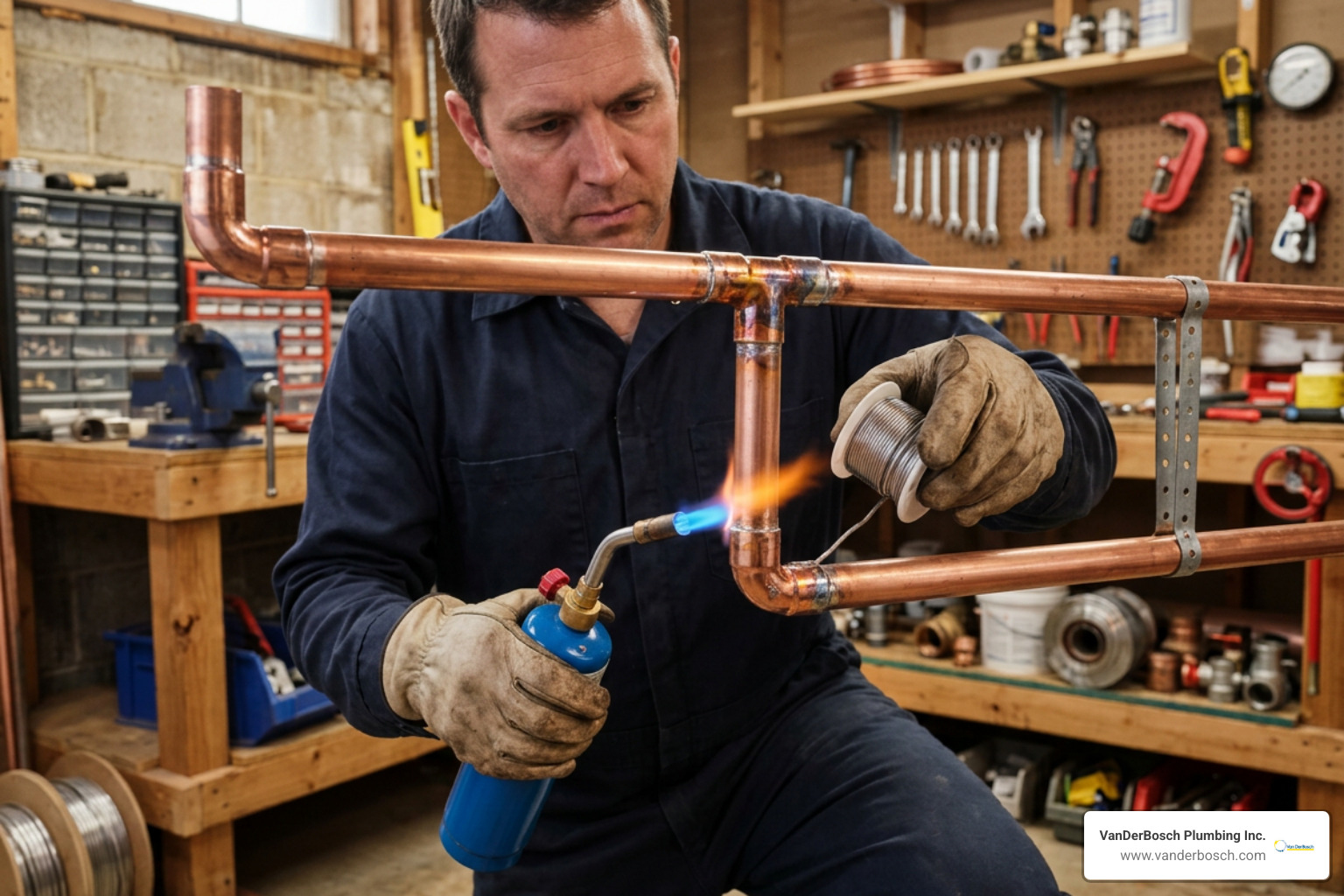
Connecting a copper water line can be accomplished using several established methods, depending on accessibility, local code, and job requirements:
- Soldering (Sweating): The traditional standard for interior copper plumbing. A torch heats the cleaned, fluxed fitting cup until solder melts and draws into the capillary space. Solder alloys used on drinking water lines must legally contain less than 0.2% lead.
- Brazing: Uses higher temperatures (above 800°F) and filler metals containing silver or phosphorus. It creates high-strength joints commonly required in commercial mechanical and HVAC applications.
- Press-Fit Technology: Uses specialized hydraulic press tools and mechanical fittings with built-in O-rings. It joins pipes fast without open flames, making it ideal for retrofits where fire watch protocols are strict.
- Compression and Push-to-Connect: Great for small connections, low-pressure lines, or temporary repairs. These require no special heating tools or crimpers.
Protecting a Copper Water Line from Corrosion and Freezing
Copper is extremely durable, but specific environmental factors can shorten its service life. Acidic water with a pH below 6.5 strips away the inner copper oxide film, causing pinhole leaks over time.
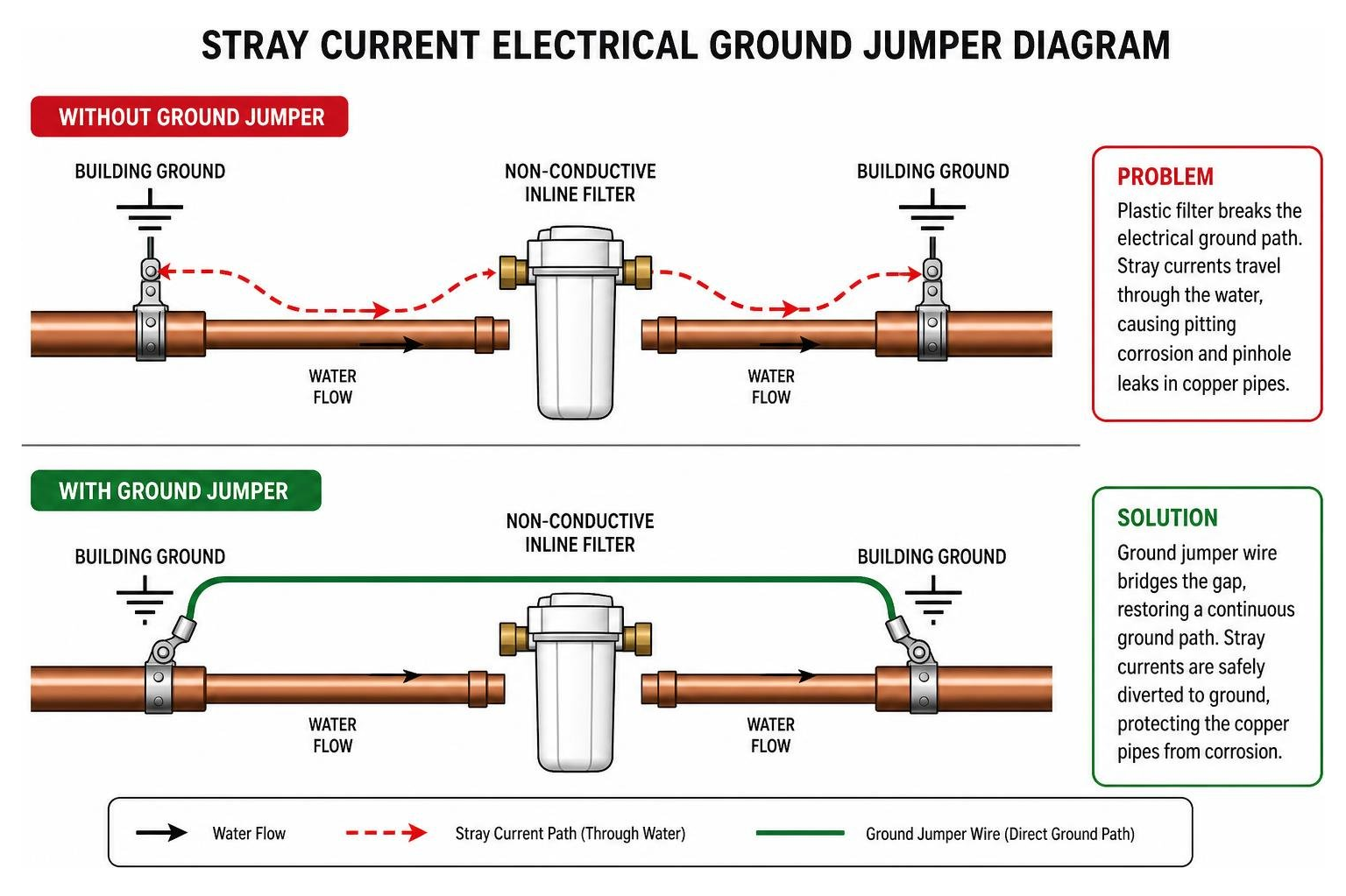
Additionally, stray electrical currents can cause severe pitting corrosion. When non-conductive plastic components (like an inline water filter) are inserted into a copper line, they break the building’s continuous grounding path. Without a electrical grounding jumper wire bridging the gap, stray currents travel through the water column, causing corrosion that can punch pinholes through the pipe wall within months.
If you spot mysterious wet spots on drywall or sudden drops in water pressure, turn to our Water Leak Detection services to pinpoint hidden issues before major water damage occurs.
Trenchless vs. Open Trench Underground Installation
When installing an underground main copper water line, contractors choose between two primary methods:
- Open Trenching: Trenching involves digging up the soil along the full pipe path. The line should be bedded in smooth, homogeneous fill such as washed pea gravel or sand. Placing copper directly on uneven, undisturbed soil creates oxygen differential cells that cause accelerated localized corrosion.
- Trenchless Methods (Impact Moling / Directional Drilling): These techniques pull continuous soft copper tubing under driveways and lawns without disturbing the surface.
Before making final underground flare or compression connections, technicians use specialized sizing tools to re-round any uncoiled soft tubing ends, ensuring an airtight seal.
Water Safety, Local Codes, and Lead Service Replacements
Copper plumbing provides clean, safe drinking water for millions of homes. When water chemistry is balanced, copper forms an insoluble protective patina inside the pipe. However, if water is overly acidic, trace amounts of copper can leach into drinking supplies.
Because of its flame resistance and reliability under pressure, copper remains strongly mandated in local Chicagoland building codes, commercial high-rises, and hospital medical-gas networks.
Replacing Lead Service Pipes with a Modern Copper Water Line
Many older homes throughout Chicago, Cook County, and surrounding communities like Winnetka, Roselle, and Niles still rely on outdated lead service pipes. The federal government banned lead plumbing components in 1986, and current Illinois EPA regulations mandate replacing municipal lead service lines.
Upgrading an old lead supply pipe to a heavy-duty Type K copper water line eliminates dangerous lead exposure risks for your family. If you need to upgrade your main supply, read our complete guide on How to Replace Your Main Water Line from Meter to House or learn more at Lead Service Line Replacement.
Frequently Asked Questions About Copper Plumbing
How long does a copper water main line last?
Under standard water conditions and proper underground installation, a Type K or Type L copper service line typically lasts 50 to 70+ years. Severe acidic water chemistry, aggressive soils, or high flow velocities can shorten this lifespan.
Why does low water pH cause pinhole leaks in copper pipes?
Water with a acidic pH below 6.5 strips away the thin, protective oxide layer that naturally forms inside copper pipes. Once that barrier breaks down, bare copper reacts with dissolved minerals, forming tiny pits that eventually turn into pinhole leaks. Installing a neutralization system or following The Ultimate Guide to Whole House Water Filtration and Softener System can help balance aggressive tap water.
Is drinking water running through copper pipes safe for my family?
Yes, copper pipes are safe and meet all EPA drinking water standards. Copper features natural biostatic properties that slow down bacterial growth inside your plumbing lines.
Conclusion
Choosing a copper water line provides long-term peace of mind, high heat tolerance, UV resistance, and proven fire safety. While installation costs are higher than plastic alternatives, copper’s multi-decade lifespan makes it a high-value investment for both residential main water lines and commercial plumbing systems.
When you need professional water line installation, repiping, or emergency leak repairs, trust our team at VanDerBosch Plumbing Inc.. We proudly serve homeowners across Chicago, Cook County, Elmhurst, Mount Prospect, Melrose Park, Oakbrook Terrace, and surrounding Chicagoland communities.
We deliver 24/7 availability, background-checked plumbers, transparent pricing with no hidden charges, and a 100% satisfaction guarantee. Contact us today or visit our Water Line Repair service page to schedule your service with our expert team!