
Why a Crawl Space Leak Is a Problem You Can’t Afford to Ignore
A crawl space leak can quietly destroy your home from the ground up — long before you notice any signs upstairs. Here’s a quick summary of what you need to know:
Quick answers:
- What causes it? Plumbing failures (like PEX pipe pinpricks), groundwater pressure, poor drainage, or condensation
- What damage does it cause? Mold, wood rot, pest infestations, sagging floors, and higher energy bills
- How do you find it? Look for damp insulation, musty odors, efflorescence on walls, or warped floorboards
- What should you do first? Remove standing water, pull out wet insulation, dry the area, then fix the source
- How do you prevent it? Proper grading, clean gutters, vapor barriers, and regular inspections
Most homeowners never think about their crawl space — until something goes wrong. And by then, water may have been sitting there for weeks, months, or even years.
The damage isn’t just structural. Research shows that up to 50% of the air circulating through your living space originates from below — meaning mold spores, humidity, and musty odors travel straight up into the rooms where you sleep, eat, and breathe.
That’s what makes crawl space moisture so dangerous. It’s a slow, hidden problem with fast, expensive consequences.
I’m Hugh Hodur, President of VanDerBosch Plumbing Inc., and I’ve helped countless Chicagoland homeowners track down and fix crawl space leaks — from burst pipes and PEX failures to chronic groundwater intrusion. In this guide, I’ll walk you through everything you need to identify, address, and prevent a crawl space leak in your home.

Common Causes of a Crawl Space Leak
In our decades of experience serving the Chicagoland area, from the North Side to Roselle and Winnetka, we’ve seen that a Crawl space leak rarely has a single “smoking gun.” Usually, it’s a combination of internal plumbing failures and external environmental pressures. Understanding where the water is coming from is the first step toward a permanent fix.
Identifying an Internal Plumbing Crawl Space Leak
Internal leaks are often the “good news” in crawl space repair because they are generally easier and less expensive to fix than massive foundation issues. However, they can be incredibly sneaky.
One of the most common culprits we see in newer homes (built around 2013-2014) is PEX pipe failure. While PEX is flexible and durable, certain generations of these pipes can develop “pinprick” leaks. These tiny holes might not cause a flood immediately, but they can spray a fine mist for months, completely soaking your fiberglass insulation without you ever hearing a drop.
Other internal sources include:
- Appliance Hose Leaks: A dishwasher or refrigerator line that slow-drips through the floor.
- Rushing Water Sounds: If you hear water running when no faucets are on, you likely have a significant line break below the floorboards.
- Constant Puddling: If a puddle remains in the same spot even during a dry Chicago summer, it’s almost certainly a plumbing issue.
If your pipes are aging or showing signs of multiple pinprick failures, it might be time to ask: Do You Need Repiping? For localized issues, our Services Water Line Repair can handle the job quickly to stop the moisture at its source.
External Sources and Hydrostatic Pressure
In Chicago and Cook County, our heavy rains and clay-rich soil create a “perfect storm” for external water intrusion.
- Hydrostatic Pressure: When the soil around your foundation becomes saturated, it exerts massive pressure against your walls. This pressure forces water through tiny cracks or “cold joints” (where the floor meets the wall).
- The Clay Bowl Effect: When your home was built, the soil excavated for the foundation was looser than the “virgin” soil around it. This creates a “bowl” that traps water right against your crawl space walls.
- Improper Grading and Clogged Gutters: If your gutters are full of leaves or your soil slopes toward the house, thousands of gallons of rainwater are dumped directly onto your foundation.
- High Water Table: In areas like Niles or Skokie, a naturally high water table can cause water to seep upward through the crawl space floor during the rainy season.
According to the CDC’s Chapter 6: Housing Structure guidelines, maintaining the integrity of the building envelope is crucial for health, and that starts with managing how water interacts with your foundation.
The Hidden Dangers of Unaddressed Moisture
Ignoring a Crawl space leak is like ignoring a termite infestation — just because you can’t see the damage today doesn’t mean your home isn’t being slowly dismantled.
Mold, Rot, and Pests
Moisture is the “on” switch for biological growth. Mold needs only two things to thrive: moisture and organic material (like the paper backing on your insulation or your wooden floor joists). Once mold takes hold, it releases spores that can trigger allergies, asthma, and other respiratory issues for your family upstairs.
Beyond mold, chronic wetness leads to wood rot. Rotten joists lose their structural integrity, leading to sagging floors and cracked drywall in your living room. Furthermore, damp wood is a magnet for termites and carpenter ants. We’ve even seen cases where damp crawl spaces attract rats that gnaw through electrical wiring, creating a legitimate fire hazard.
If you suspect your sewer lines might be contributing to the dampness or odor, a Services Sewer Video Inspection can rule out underground pipe collapses. You should also keep an eye out for Signs Repiping Services May Be Needed, such as persistent musty smells or discolored water.
Impact on Energy Efficiency and Air Quality
Many homeowners are shocked to learn that a wet crawl space is why their energy bills are so high. Damp air is significantly harder (and more expensive) to heat and cool than dry air.
The “Stack Effect” is a scientific reality in every home. As explained by the U.S. Department of Energy, as warm air rises and escapes through your attic, it creates a vacuum that pulls air from the lowest point of the house — the crawl space — upward.
- 50% Air Exchange: Up to half of the air you breathe on the first floor comes directly from the crawl space.
- Energy Savings: Research indicates that properly drying and sealing a crawl space can save between 15% and 25% on heating and cooling costs.
How to Identify and Confirm a Crawl Space Leak
Since most of us don’t spend our weekends lounging in the crawl space, you need to know the “tells” that indicate a problem.
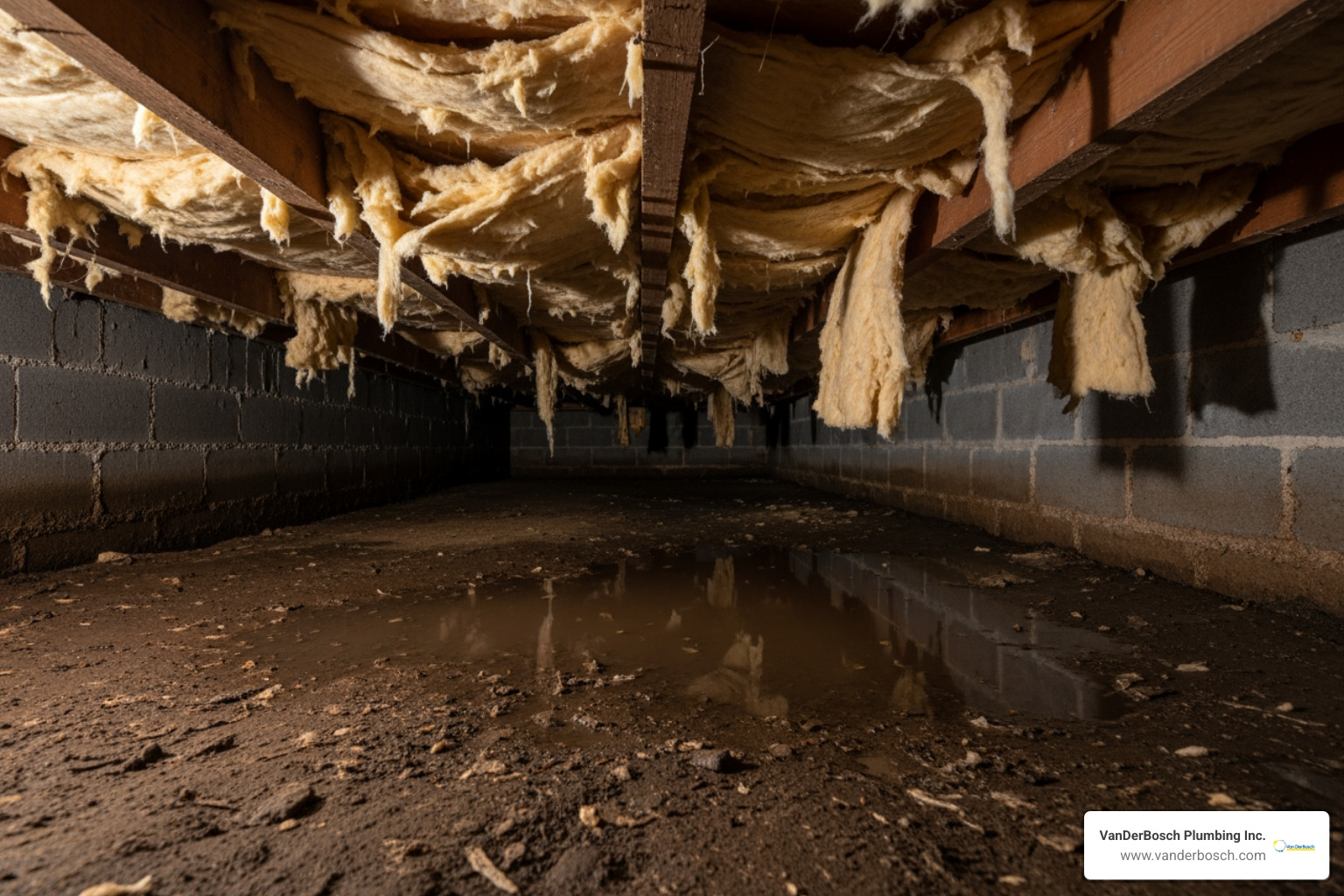
- Visual Cues: Use a high-powered flashlight to look for standing water or “efflorescence” — a white, powdery crystalline deposit on concrete walls that indicates water has been seeping through.
- Damp Insulation: If your fiberglass batts are heavy, sagging, or falling down, they have absorbed moisture like a sponge.
- Warped Floorboards: If your hardwood floors upstairs are “cupping” or feeling soft, the moisture level below them is likely off the charts.
- Musty Odors: That “old basement” smell is actually the scent of mold and microbial volatile organic compounds (mVOCs).
If you’re unsure whether a wet spot is a one-time spill or a chronic issue, our Water Leak Detection in Skokie IL and Roselle Services Water Leak Detection experts use specialized moisture meters and thermal imaging to find hidden water without tearing down walls.
Immediate Steps and Long-Term Remediation
Found a Crawl space leak? Don’t panic, but do act fast. The longer water sits, the more it feeds mold.
The Cleanup Process
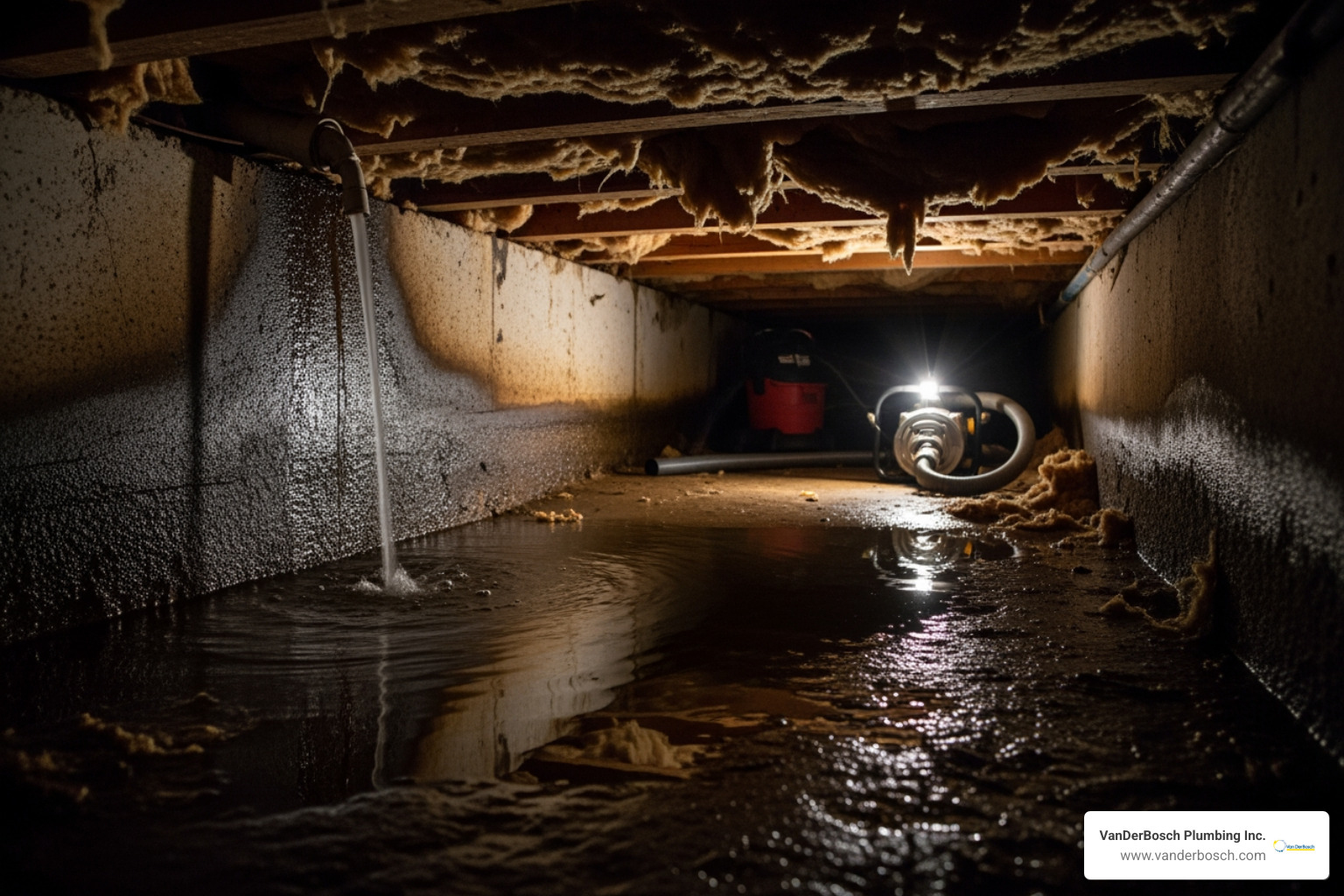
- Stop the Source: If it’s a pipe, shut off the water. If it’s groundwater, you’ll need a pump.
- Water Extraction: Use a submersible pump or a wet/dry shop vac to remove standing water.
- Remove Wet Materials: Soaked fiberglass insulation must be removed and discarded. It cannot be “dried out” effectively once it has been saturated.
- High-Volume Drying: Use industrial fans and a high-capacity dehumidifier. Standard household fans won’t cut it in a confined, low-airflow space.
Vapor Barriers vs. Full Encapsulation
Once the area is dry, you need a long-term strategy to keep it that way.
| Feature | Vapor Barrier (Basic) | Full Encapsulation (Premium) |
|---|---|---|
| Coverage | Dirt floor only | Floor and walls up to the sill plate |
| Material | 6-mil polyethylene | 12-mil to 20-mil reinforced liner |
| Sealing | Overlapped seams | Taped seams and mechanically fastened |
| Moisture Control | Reduces ground evaporation | Blocks almost all moisture entry |
| Cost | Lower | Higher |
For homes with recurring pipe issues, a Services Whole Home Repipe might be the only way to ensure you aren’t dealing with a new leak every six months.
Professional Drainage Solutions
If your problem is groundwater, a piece of plastic on the floor won’t be enough. You need to manage the water’s path.
- Interior Drain Tiles: A perforated pipe installed in a gravel-filled trench around the inside perimeter of the crawl space.
- Sump Pump Installation: The drain tiles lead the water to a sump pit, where a pump automatically ejects it away from the house.
- Trenchless Solutions: For exterior pipe issues, Services Trenchless Pipe Repair or our Roselle Services Trenchless Pipe Repair allows us to fix lines without destroying your landscaping.
Preventing a Future Crawl Space Leak
Prevention is always cheaper than remediation. Here is your checklist for a dry home:
- Gutter Maintenance: Clean your gutters at least twice a year. If they overflow, they dump water directly into your “clay bowl.”
- Downspout Extensions: Ensure your downspouts discharge at least 6 to 10 feet away from the foundation.
- Soil Regrading: The ground should slope away from your house at a rate of at least 1 inch per foot for the first 6 feet.
- Vent Sealing: In the Chicagoland climate, open crawl space vents often do more harm than good by letting in humid summer air that condenses on cold pipes.
- Smart Sensors: Install Wi-Fi-enabled leak sensors that alert your phone the second moisture is detected.
- Regular Inspections: Schedule an annual Services Drain Cleaning and plumbing checkup to catch small drips before they become disasters.
If you are dealing with underground pipe failures, it helps to understand What to Know About Trenchless Pipe Repairs so you can make an informed decision about your home’s infrastructure.
Frequently Asked Questions about Crawl Space Water
Does homeowners insurance cover crawl space leaks?
Typically, homeowners insurance covers sudden and accidental water damage, such as a pipe that bursts overnight. However, most policies exclude damage caused by “seepage” (water that slowly enters over time) or “lack of maintenance.” Groundwater flooding usually requires a separate flood insurance policy. Always check your specific policy details.
How long does it take to dry out a crawl space?
With professional-grade high-volume fans and dehumidifiers, a crawl space can usually be dried within 24 to 72 hours. If you are relying on natural airflow, it could take weeks, which significantly increases the risk of mold growth.
Is a dirt floor crawl space always damp?
Essentially, yes. Soil always contains a certain amount of moisture. Without a vapor barrier, that moisture constantly evaporates into the air under your home, creating a humid environment that leads to rot and attracts pests. A 6-mil or thicker polyethylene barrier is a minimum requirement for a healthy home.
Conclusion
A Crawl space leak is a serious threat to your home’s structural integrity, your family’s health, and your monthly budget. Whether you’re dealing with a pinprick PEX leak in Oakbrook Terrace or groundwater seepage in Hyde Park, the key is to act quickly and address the root cause, not just the symptoms.
At VanDerBosch Plumbing Inc., we’ve been the trusted choice for Chicagoland homeowners for decades. We offer licensed, background-checked technicians who are available 24/7 for emergencies. With our 100% satisfaction guarantee and transparent pricing (no service charges!), you can rest easy knowing your home is in expert hands.
Don’t let a small drip turn into a massive headache. If you suspect a leak, contact us today for expert Services Water Leak Detection and repair. We’re here to keep your crawl space dry and your home healthy.