
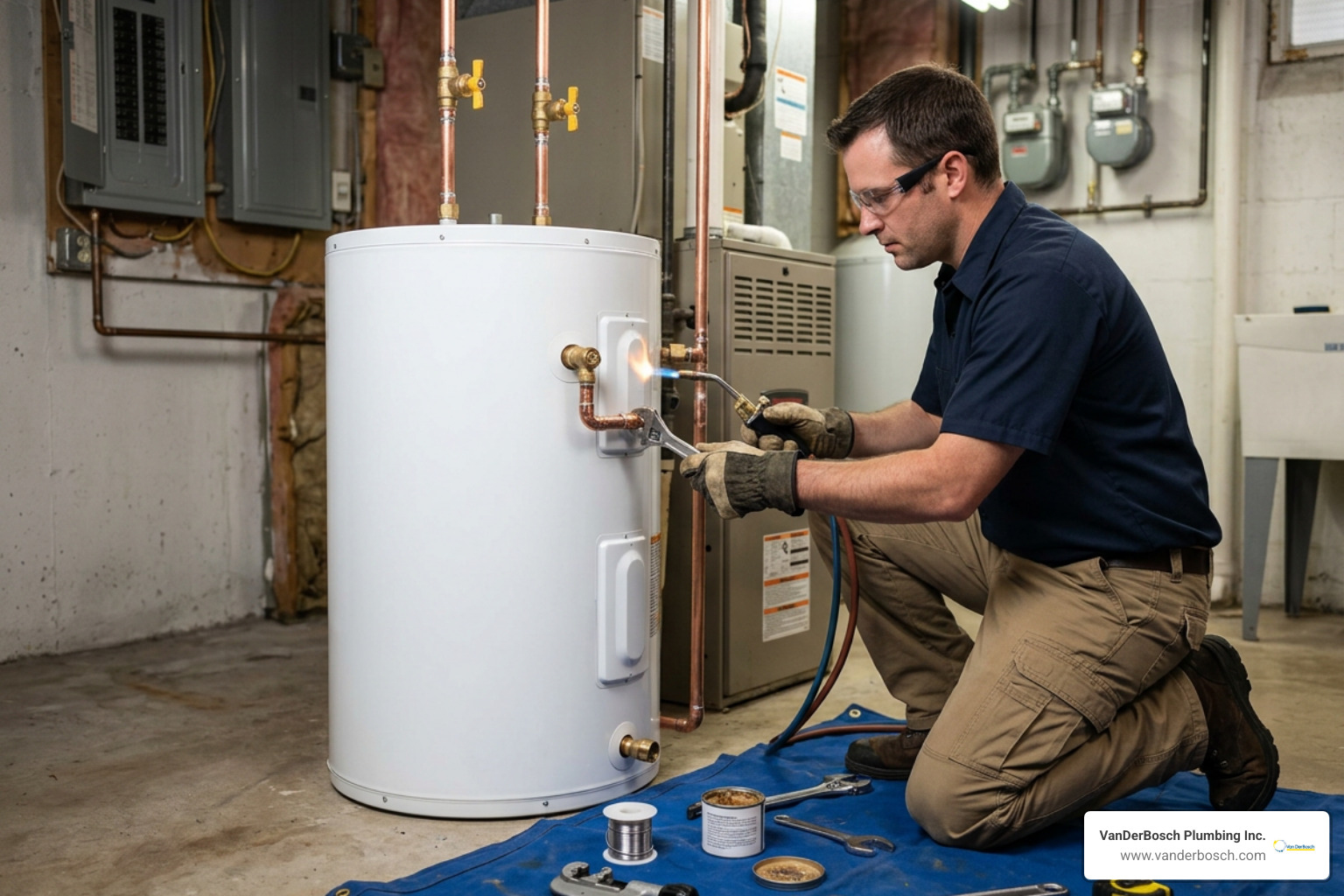
When Your Water Heater Fails, Here’s What Chicagoland Homeowners Need to Know First
Affordable water heater replacement doesn’t have to mean cutting corners — but knowing your options upfront can save you hundreds of dollars and a lot of stress.
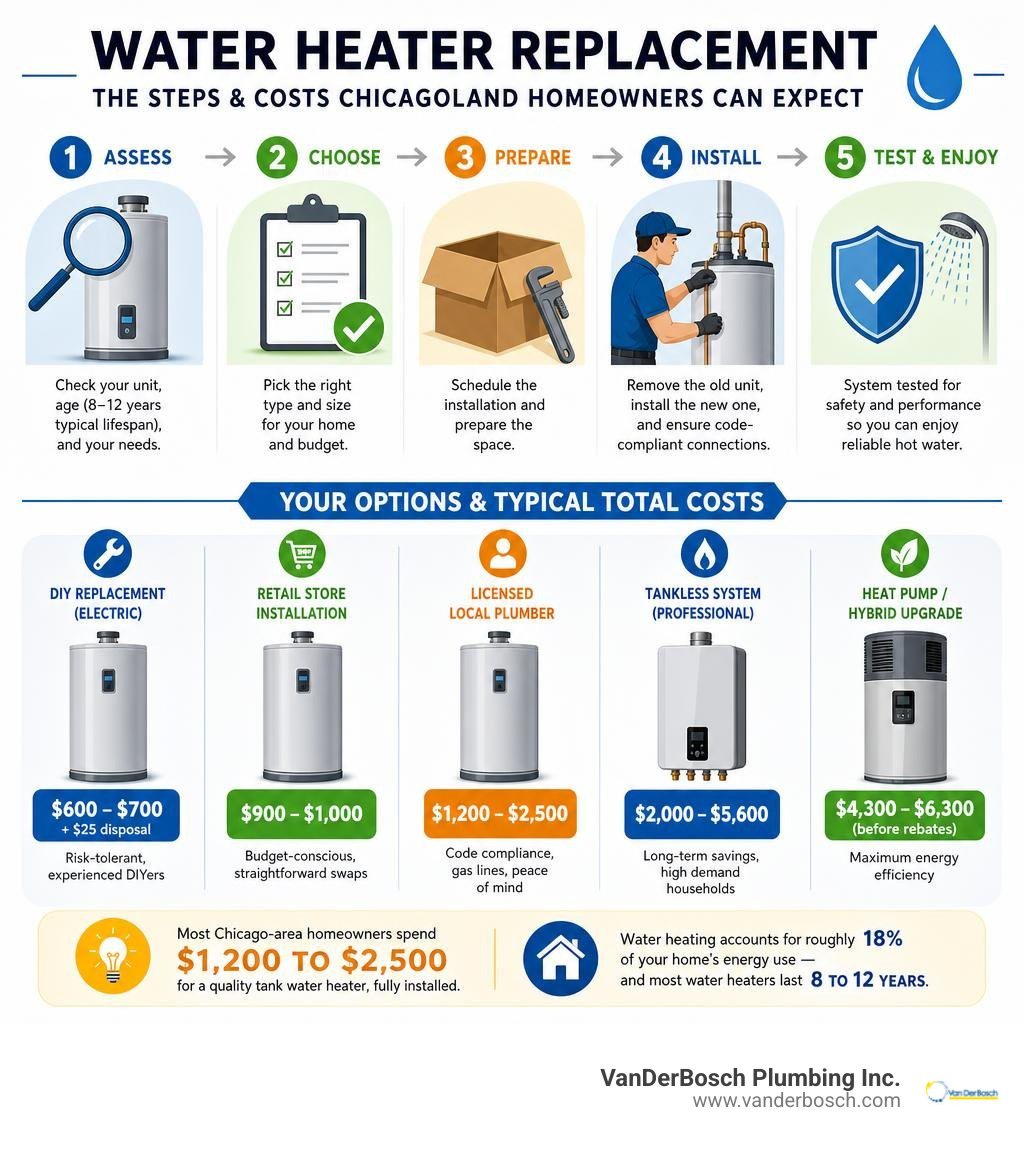
Here’s a quick snapshot of what most Chicagoland homeowners can expect:
| Option | Typical Total Cost | Best For |
|---|---|---|
| DIY replacement (electric) | $600 – $700 + $25 disposal | Risk-tolerant, experienced DIYers |
| Retail store installation (e.g., Home Depot) | $900 – $1,000 | Budget-conscious, straightforward swaps |
| Licensed local plumber | $1,200 – $2,500 | Code compliance, gas lines, peace of mind |
| Tankless system (professional) | $2,000 – $5,600 | Long-term savings, high demand households |
| Heat pump / hybrid upgrade | $4,300 – $6,300 (before rebates) | Maximum energy efficiency |
Most Chicago-area homeowners spend around $1,200 to $2,500 for a quality tank water heater, fully installed.
Water heating accounts for roughly 18% of your home’s energy use — and with most water heaters lasting only 8 to 12 years, a failing unit isn’t just an inconvenience. It’s a decision with real financial weight.
Whether your water heater just quit on a cold January morning or you’re hearing rumbling noises from the basement, this guide walks you through every option — from the cheapest DIY route to smart long-term upgrades — so you can make a confident, informed choice.
I’m Hugh Hodur, President of VanDerBosch Plumbing Inc., and I’ve spent years overseeing water heater repair and installation across the Chicagoland area, helping homeowners find genuinely affordable water heater replacement solutions that are safe, code-compliant, and built to last. Let’s break down exactly what you need to know.
Must-know affordable water heater replacement terms:
Is It Time for a Repair or a Full Replacement?
Before you pull the trigger on a brand-new unit, it is crucial to determine if your current water heater is truly at the end of its life or if a simple, targeted repair can get you back in hot water.
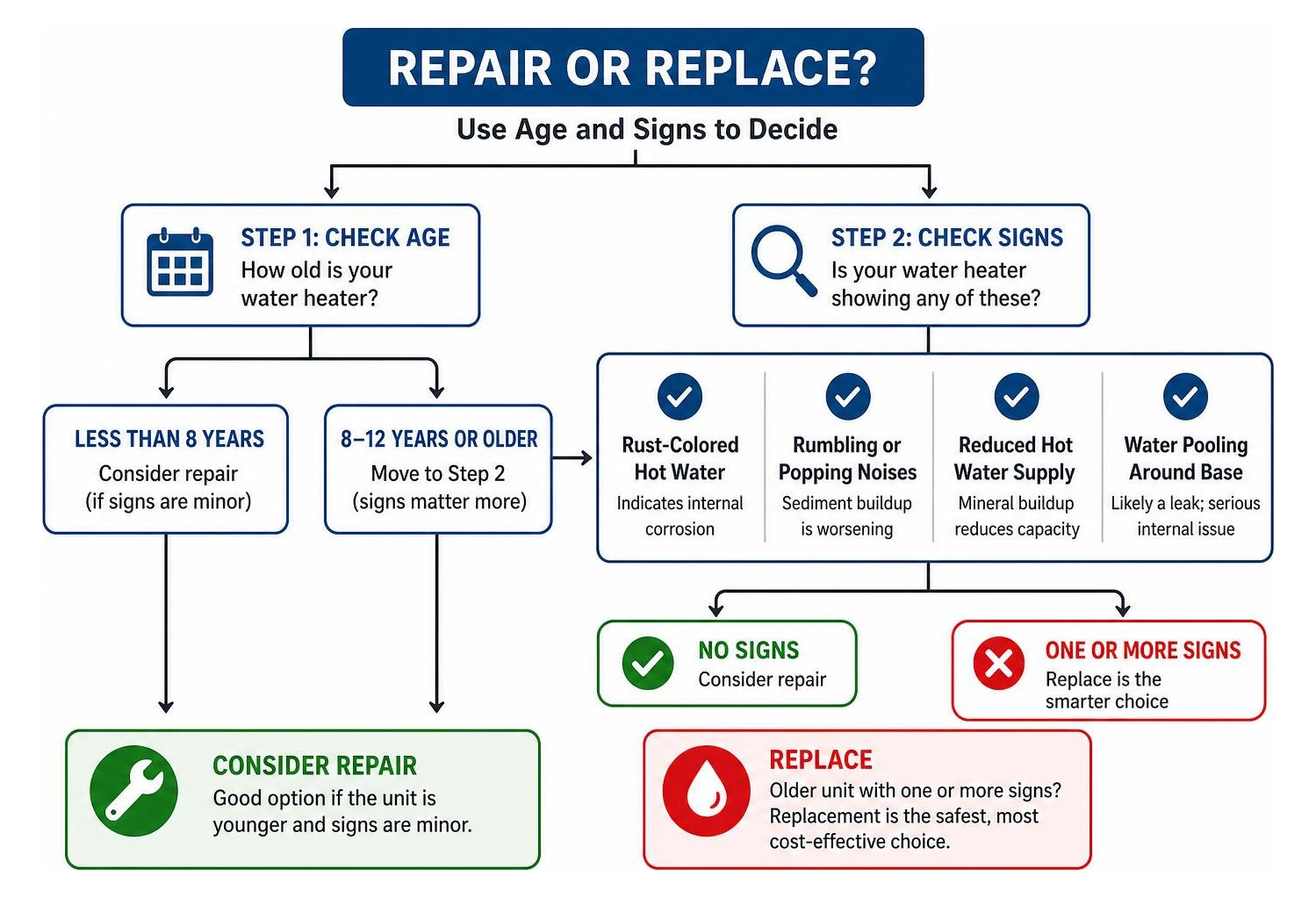
Generally, residential water heaters have an average lifespan of 8 to 12 years. If your unit is approaching or has passed the decade mark, proactively planning an affordable water heater replacement is almost always more cost-effective than waiting for a catastrophic leak to flood your basement.
For homeowners in Chicago, Cook County, and surrounding suburbs like Elmhurst or Roselle, local water chemistry plays a massive role in equipment longevity. Chicago’s water supply, while highly treated, carries mineral content that can accelerate sediment buildup. Over time, these minerals settle at the bottom of the tank, creating an insulating layer that forces your water heater to work harder, run hotter, and decay faster. This environmental strain can easily shave 2 to 3 years off your system’s life.
To help you decide whether to fix your current setup or buy a new one, read our guide on Signs Your Water Heater May Need Repair Or Replacement and learn more about When Should Homeowners Break Up With Their Water Heaters.
Signs Your Water Heater is Failing
How do you know if your water heater is holding on by a thread? Look out for these common warning signs:
- Rust-Colored Hot Water: If your cold water runs clear but your hot water has a reddish-brown tint, it is a strong indicator that the internal glass lining of your tank has cracked and the steel tank itself is corroding.
- Rumbling or Popping Noises: As sediment builds up at the bottom of the tank, pockets of water get trapped underneath the hardened mineral crust. When this water heats up, it boils and erupts through the sediment layer, creating distinct popping or rumbling sounds. Once sediment has fully solidified, it can rarely be flushed out, meaning replacement is on the horizon.
- Reduced Hot Water Supply: If your morning shower turns ice-cold halfway through, mineral accumulation has likely stolen a significant portion of your tank’s heating capacity.
- Water Pooling Around the Base: This is the ultimate red-handed sign of a terminal issue. If you spot water pooling at the base of your unit, you need to determine where it is coming from. To diagnose the source, read our breakdown on Why Is My Water Heater Leaking. A leak from the top is often repairable (usually a loose fitting or a faulty temperature and pressure relief valve). However, a leak from the bottom of the tank itself indicates internal corrosion and a cracked inner shell, which cannot be repaired and requires immediate replacement.
How to Safely Shut Off a Leaking Water Heater
If you discover your water heater is actively leaking, you must act fast to prevent structural rot, mold, and expensive basement water damage. Follow these steps to perform an emergency shutdown:
- Cut the Power Source:
- For Electric Water Heaters: Locate your home’s main breaker panel and flip the dedicated water heater circuit breaker to the “Off” position. Never touch a leaking electric water heater while the power is still live.
- For Gas Water Heaters: Locate the gas control dial on the front of the water heater tank and turn it from “On” to “Off” or “Pilot”. You should also close the manual gas shut-off valve on the incoming gas line (turn the valve handle perpendicular to the pipe).
- Shut Off the Water Supply: Locate the cold water inlet pipe at the top of the water heater. Turn the valve clockwise (for traditional gate valves) or perpendicular to the pipe (for modern ball valves) to stop the flow of cold water into the tank.
- Open the Hot Water Faucets: Open a few hot water faucets in your home (such as in a nearby bathroom or kitchen sink). This releases pressure within the plumbing lines and helps stop the active siphon leak.
Understanding the Cost of Affordable Water Heater Replacement
When budgeting for a replacement, it helps to understand what drives the final price tag. In the Chicagoland area, a standard professional water heater replacement typically ranges from $1,200 to $2,500 for a quality storage tank unit, including both the equipment and professional labor.
Several key factors influence where your project will fall in this range:
- Labor Rates: Labor costs in Cook County run approximately 12% above the national average due to the region’s higher cost of living and strict local licensing standards. Standard plumbing labor for a tank-to-tank swap generally runs between $150 and $450, depending on the accessibility of your unit.
- Permit and Code Requirements: Cook County and local municipalities (such as Niles, Winnetka, or Melrose Park) require plumbing permits for water heater installations. These permits typically cost between $25 and $300 (and up to $425 in some high-density Cook County areas). Skipping the permit is a costly mistake that can void your homeowner’s insurance and complicate future home sales.
- Unexpected Modifications: About 30% of standard replacements encounter minor complications. If your home has older, corroded valves, outdated venting, or lacks a thermal expansion tank (now mandated by modern building codes), expect to spend an additional $200 to $500 to bring the system up to current safety standards.
For a deeper dive into these numbers, check out our comprehensive guide: How Much Does A New Water Heater Actually Cost.
Comparing Tank vs. Tankless Systems
One of the first decisions you’ll face is choosing between a traditional storage tank and a modern tankless system.
Traditional tank water heaters keep 40 to 50 gallons of water hot 24/7. This continuous heating leads to standby heat loss—energy wasted keeping water hot when nobody is home. Tankless systems, on the other hand, heat water instantly as it flows through a high-powered heat exchanger, eliminating standby loss entirely.
| Feature | Traditional Storage Tank | Tankless (On-Demand) |
|---|---|---|
| Upfront Cost (Installed) | $1,200 – $2,500 | $2,000 – $5,600 |
| Energy Efficiency | ~62% Uniform Energy Factor (UEF) | ~95% Uniform Energy Factor (UEF) |
| Average Lifespan | 8 to 12 Years | 15 to 20 Years |
| Standby Heat Loss | Yes (10% to 15% of heating costs) | No |
| Hot Water Supply | Limited by tank size | Endless (but limited flow rate) |
| Space Required | High (large physical footprint) | Low (wall-mounted, compact) |
While tankless systems save roughly $100 per year on utility bills and last twice as long, they carry a high upfront cost. They also require specialized venting and occasionally gas line or electrical panel upgrades. If you’re interested in going tankless, read our Tankless Water Heater service page and our Tankless Water Heaters guide to see if it fits your home.
Is a Hybrid Heat Pump Upgrade Worth the Investment?
If you have an all-electric home, upgrading to a hybrid heat pump water heater is an incredibly smart way to secure long-term savings.
Instead of generating heat directly through electric resistance elements, a heat pump water heater pulls heat from the surrounding basement air and transfers it to the water. This makes them two to four times more energy-efficient than standard electric tanks.
While a hybrid unit can cost between $4,300 and $6,300 upfront, the long-term savings are massive. Because they are so efficient, they qualify for substantial financial help:
- Federal Tax Credits: Under the Inflation Reduction Act, homeowners can claim a $2,000 federal tax credit for installing an Energy Star-certified heat pump water heater.
- Local Utility Rebates: Local Chicagoland utilities like ComEd offer generous rebates that can shave hundreds of dollars off the initial purchase price.
Over the lifespan of the system, a hybrid heat pump water heater can easily pay for itself, making it a premier choice for green-minded homeowners.
Sizing and Selecting Your New Water Heater
Buying the largest water heater available is a common mistake. An oversized system costs more upfront and wastes energy keeping unnecessary water hot. Conversely, an undersized unit leads to cold showers and constant system strain.
To find the perfect balance, you must look at your household size and your peak hot water demand, known as the First-Hour Rating (FHR). The FHR is the number of gallons a fully heated water heater can deliver in its first hour of continuous use.
To explore how different types of systems match your home’s infrastructure, read our guide on Choosing The Right Type Of Water Heater For Installation.
Sizing Guidelines for Your Household
For storage tank systems, you can use these general guidelines to match your household size:
- 1 to 2 People: 30 to 40-gallon tank
- 3 to 4 People: 40 to 50-gallon tank (a family of four running multiple appliances almost always needs a 50-gallon water heater)
- 5+ People: 75-gallon tank (or a tankless system)
If you are switching to a tankless system, sizing is calculated in Gallons Per Minute (GPM). You must add up the flow rates of all fixtures you expect to run simultaneously. For example, a standard shower uses about 2 GPM, and a washing machine uses 1.5 GPM.
In Chicago, winter groundwater temperatures can drop to a near-freezing 35°F. Because the incoming water is so cold, your water heater must work significantly harder to raise the temperature to a comfortable 120°F. This means Chicago homes require higher-BTU gas tankless units or larger storage capacities than homes in warmer climates to meet the same peak demand.
What to Look For in an Affordable Water Heater Replacement Brand
When shopping for an affordable water heater replacement, don’t just look at the price tag. Keep an eye out for these key quality indicators that ensure long-term durability:
- Longer Warranty Lengths: Standard water heater warranties range from 6 to 12 years. Models with longer warranties generally feature thicker steel tanks, larger sacrificial anode rods, and higher-quality heating elements.
- Brass Drain Valves: Avoid units with plastic drain valves. Plastic valves are highly prone to cracking, stripping, and leaking during routine maintenance flushes. High-quality, contractor-grade units feature heavy-duty brass drain valves.
- Uniform Energy Factor (UEF): Look for the Energy Star label and check the UEF rating. A higher UEF indicates better thermal efficiency, which directly lowers your monthly utility bills.
DIY vs. Professional Installation: Finding the Cheapest Route
When your water heater dies, it is tempting to take the DIY route to save on labor. However, water heater installation involves high-voltage electricity, natural gas lines, carbon monoxide venting, and pressurized water systems.
To understand the financial and safety differences of both paths, read our detailed comparison: Plumber Water Heater Repair Costs Diy And Gas Units.
The Cheapest Way to Handle an Affordable Water Heater Replacement
If you have an electric water heater and extensive DIY experience, you can potentially replace the unit yourself for around $600 to $700. This includes buying a basic 40-gallon electric tank at a retail store, $50 to $100 in copper fittings and pipes, and a $25 local dump fee to dispose of your old tank.
However, attempting to DIY a gas water heater is highly discouraged. A single mistake with a gas line connection can lead to catastrophic gas leaks, carbon monoxide poisoning, or home explosions. Furthermore, if an unpermitted DIY installation fails and causes a basement flood, your homeowner’s insurance policy may completely deny the claim, leaving you with $8,000 to $15,000 in water damage repair bills.
Retail Installation Services vs. Local Licensed Plumbers
Many homeowners turn to big-box retailers like Home Depot or Lowe’s, assuming their coordinated installation programs are the cheapest option. Typically, a retail store will charge around $500 for a basic tank and a flat $450 to $500 fee for installation, bringing the total to around $1,000.
While this sounds convenient, there are major risks. Big-box stores do not employ in-house plumbers; they subcontract the work to independent local contractors. This means you have no control over who enters your home, and navigating a warranty claim through a retail chain’s customer service department can be a bureaucratic nightmare.
Hiring a local, licensed plumbing company like VanDerBosch Plumbing Inc. ensures you receive background-checked, highly experienced technicians who stand behind their work. We understand the specific plumbing codes of Chicago, Niles, Winnetka, and Melrose Park, ensuring your installation is fully permitted and safe.
Frequently Asked Questions About Water Heater Replacement
What does professional water heater installation typically include?
When you hire a licensed plumbing company like VanDerBosch Plumbing Inc. for a water heater replacement, the service is entirely comprehensive. It typically includes:
- Delivery of the new water heater to your home.
- Complete draining, disconnection, and safe removal of your old water heater.
- Installation of the new unit, including code-mandated upgrades like a thermal expansion tank and a new temperature and pressure (T&P) relief valve.
- Connection of all water, gas, or electrical lines.
- Testing of the system, water pressure, gas lines, and venting to ensure flawless operation.
- Proper disposal and haul-away of your old unit.
To learn how to protect your investment and maintain your new system, check out our guide on How To Fix Water Heater 5 Guaranteed Methods.
Are there rebates or tax credits available for water heater replacement in 2026?
Yes! In 2026, there are several financial incentives available to make high-efficiency upgrades highly affordable.
- Federal Incentives: Under the Inflation Reduction Act, you can receive a tax credit of up to $2,000 for high-efficiency hybrid heat pump water heaters.
- Utility Rebates: Local gas and electric utilities (such as ComEd and Peoples Gas) offer rebates ranging from $50 to $500 for Energy Star-rated tank and tankless models.
- Financing Options: We offer flexible financing plans to help spread the cost of your replacement into manageable monthly payments.
How can I find a reputable installer without overpaying?
To find a trustworthy plumbing company without getting hit with hidden fees, look for the following:
- Transparent Upfront Pricing: A reputable plumber will provide a clear, itemized quote before any work begins. Avoid companies that charge mysterious “service fees” just to look at your system.
- Licensed and Insured: Always verify that the company is fully licensed to perform plumbing work in Illinois and Cook County.
- Experienced, Background-Checked Technicians: Ensure the plumbers entering your home are professional, respectful, and highly trained.
Conclusion
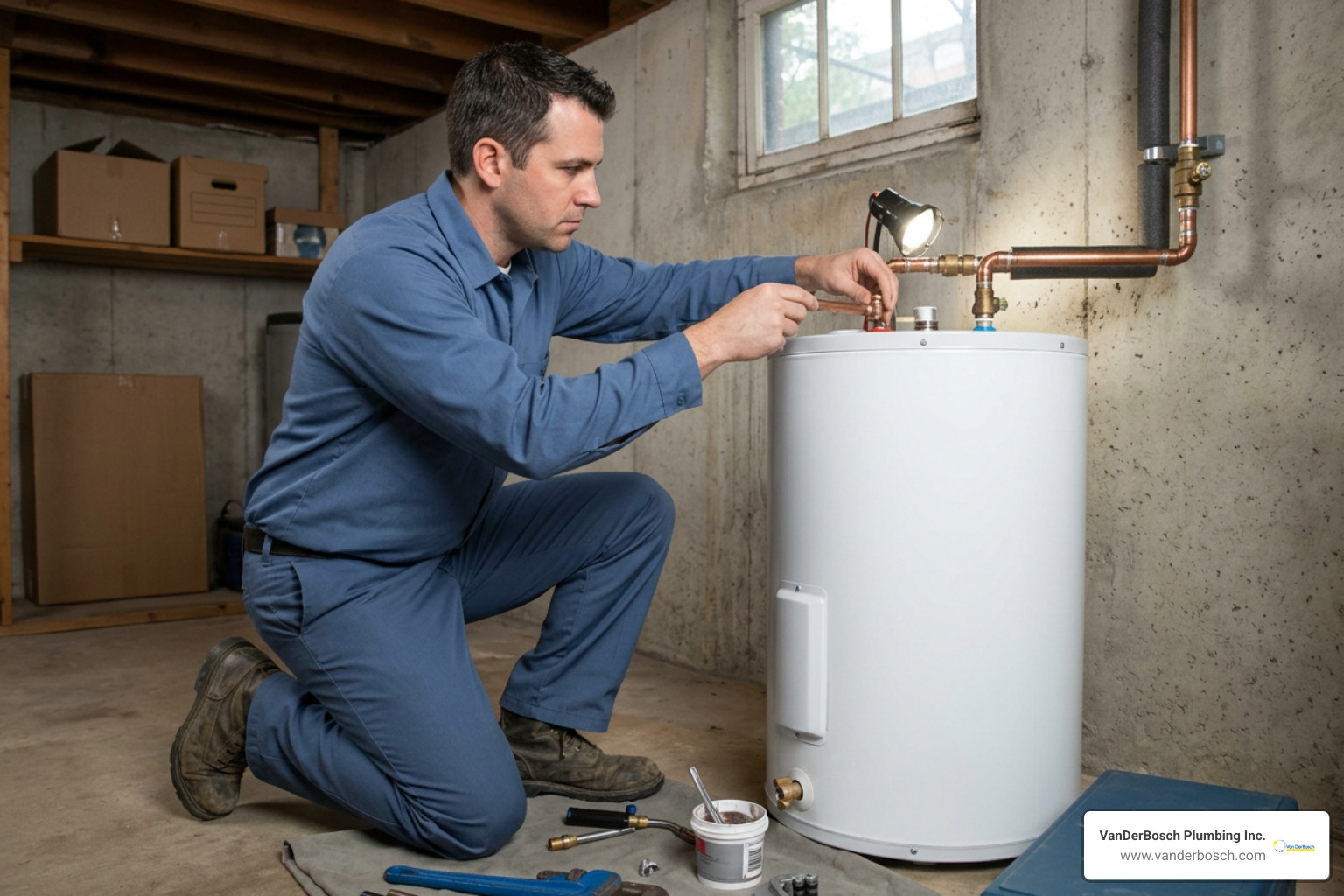
An affordable water heater replacement is about finding the perfect intersection of upfront cost, long-term energy savings, and safety. While the DIY route or cheap retail subcontractors can seem tempting, they often lead to code violations, safety hazards, and voided warranties.
At VanDerBosch Plumbing Inc., we are proud to serve communities across Chicagoland—including Chicago, Roselle, Niles, Winnetka, Melrose Park, Oakbrook Terrace, Elmhurst, and Mount Prospect. We back our professional work with a 100% satisfaction guarantee, 24/7 emergency availability, transparent pricing with absolutely no hidden service charges, and experienced, background-checked technicians.
If you are ready to secure a reliable, energy-efficient, and affordable water heater setup, check out our Water Heater service page or Contact Us today to schedule your consultation!