
How Much Does Gas Boiler Installation Cost in the Chicago Area?
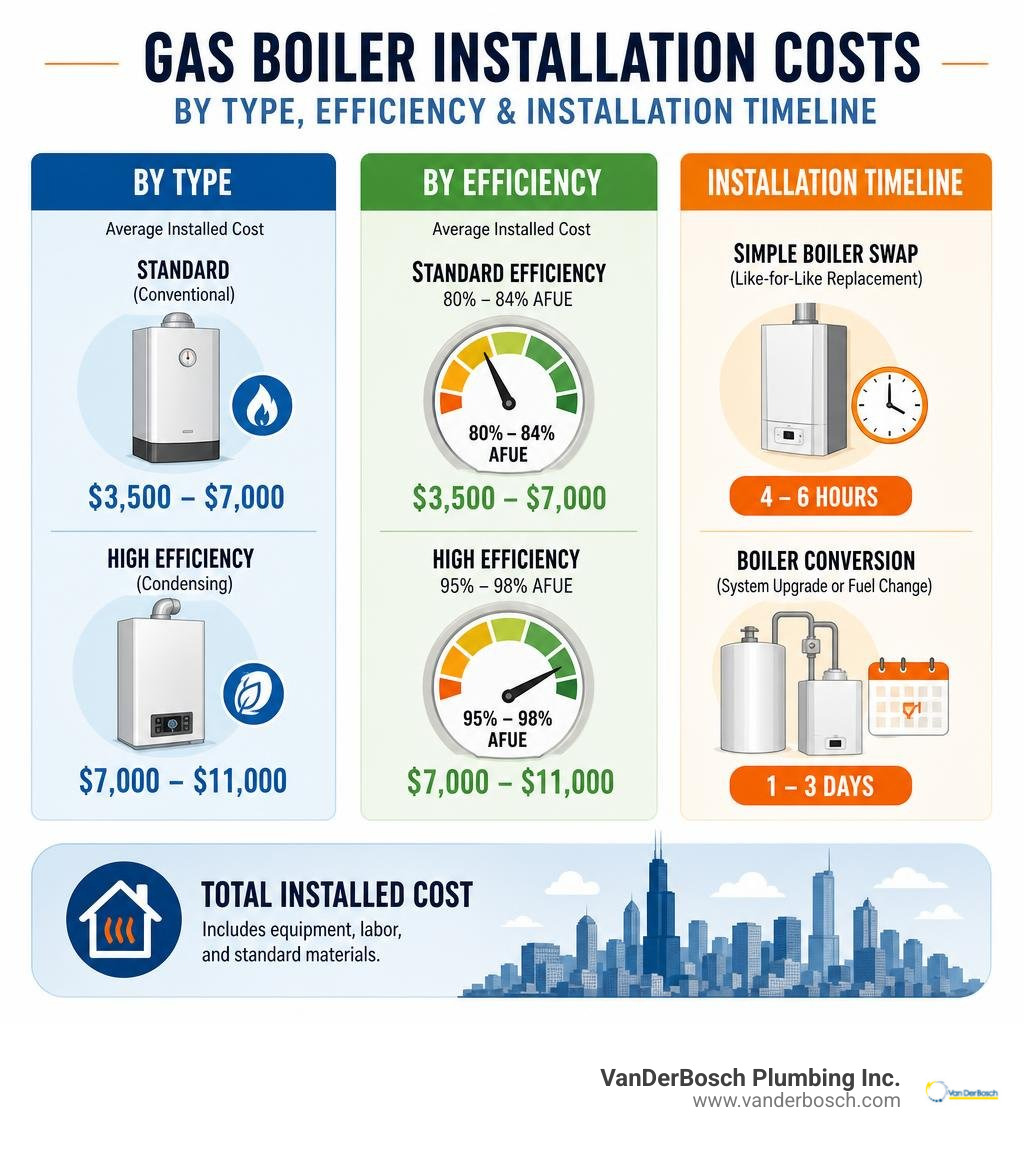
Gas boiler installation in the Chicago area typically costs between $3,500 and $10,000, depending on the boiler type, efficiency rating, and complexity of the job.
Here’s a quick snapshot to answer what most homeowners want to know first:
| Factor | Typical Range |
|---|---|
| Full installation (equipment + labor) | $3,500 – $10,000 |
| Labor only | $1,000 – $3,500 |
| Standard efficiency (80–84% AFUE) | $3,500 – $7,000 |
| High efficiency (95–98% AFUE) | $7,000 – $11,000 |
| Installation time (simple swap) | 4–6 hours |
| Installation time (conversion) | 1–3 days |
Your boiler is one of the hardest-working systems in your home — and when it fails in a Chicago winter, it fails fast. The cost of replacing it can feel like a gut punch, especially when you’re not sure what you’re actually paying for.
The good news? Once you understand the key cost drivers, the process makes a lot more sense. And knowing what to expect upfront means no surprises on invoice day.
I’m Hugh Hodur, President of VanDerBosch Plumbing Inc., and I’ve overseen countless gas boiler installation and replacement projects across the Chicagoland area. In this guide, I’ll walk you through everything you need to make a confident, informed decision.
More about gas boiler installation:
Introduction
As we navigate the chilly months of July 2026, many homeowners in Chicago and surrounding suburbs like Roselle, Niles, and Winnetka are realizing their old heating systems aren’t quite keeping up. A reliable boiler is the unsung hero of home comfort during our freezing Illinois winters. When it’s working perfectly, you don’t give it a second thought. But when it starts acting up, the sudden lack of heat and hot water becomes an immediate emergency.
Upgrading to a modern, energy-efficient gas boiler does more than just restore your peace of mind. It can also lead to massive savings on your monthly utility bills. In fact, replacing a dated, inefficient boiler with a new A-rated condensing model can save you up to $300 or more annually on heating bills.
Before committing to a new system, understand the types of boilers available, what drives the costs, and how the installation process works. Let’s break down your options so you can choose the perfect fit for your home.
Understanding Your Options: Types of Residential Gas Boilers
When planning a gas boiler installation, the first major decision is choosing the right type of boiler. Residential gas boilers generally fall into three main categories: combi (combination) boilers, system boilers, and conventional (also known as regular or heat-only) boilers.
Each system handles heating and hot water differently, and each has its own space requirements, installation complexities, and price points.
To help you visualize how these systems compare, we’ve put together this quick breakdown:
| Boiler Type | Space Required | Installation Complexity | Ideal Household Size | Average Equipment Cost |
|---|---|---|---|---|
| Combi Boiler | Very Low (No tanks) | Low to Medium | Small to Medium (1–2 bathrooms) | $1,400 – $4,500 |
| System Boiler | Medium (Requires cylinder) | Medium | Medium to Large (2+ bathrooms) | $1,500 – $5,000 |
| Conventional Boiler | High (Requires tanks & cylinder) | High | Large (Multiple bathrooms, older pipework) | $1,800 – $6,000 |
Combi Boilers: Compact and Efficient
Combination (combi) boilers are incredibly popular for small-to-medium-sized properties because they do not require separate water tanks or hot water cylinders. Instead, they function as both a high-efficiency water heater and a central heating boiler in a single compact unit.
A combi boiler heats water directly from the main supply on demand. When you turn on a hot water tap, the boiler ignites and warms the water instantly. This eliminates standby energy loss and ensures you only pay to heat the water you actually use.
However, because they rely on water pressure directly from the mains, combi boilers can struggle to supply hot water to multiple taps or showers simultaneously. If you have a larger family taking showers at the same time, you might experience a sudden Cold Shower? Common Causes of No Hot Water from Your Boiler. Combi systems are best suited for homes with one or two bathrooms where hot water demand is moderate.
System Boilers: For Larger Households
If you have a larger household with multiple bathrooms, a system boiler is often the ideal choice. These units require a separate hot water storage cylinder (typically installed in a utility closet or basement) but do not require water tanks in your attic or loft space.
Many of the major plumbing and heating components, such as the pump and expansion vessel, are built directly into the boiler itself. This makes a system boiler quicker and neater to install than a conventional setup.
Because system boilers store a large volume of hot water in a pressurized cylinder, they can easily deliver hot water to multiple showers and taps at the same time without any drop in water pressure. If you are looking to upgrade your home’s heating infrastructure to support a growing family, check out our comprehensive Services – Boiler page to see how we can assist.
Conventional Boilers: Traditional Reliability
Conventional boilers (sometimes called regular, traditional, or heat-only boilers) are the oldest type of boiler system. They require both a cold water storage tank and a feed-and-expansion tank in the loft, along with a separate hot water storage cylinder elsewhere in the home.
While they take up the most physical space, conventional boilers are highly reliable and are often the best choice for older properties in historic Chicago neighborhoods or suburbs like Melrose Park and Oakbrook Terrace. Older homes often have delicate, low-pressure pipework that cannot handle the high water pressure of a modern combi or system boiler.
Replacing an old conventional boiler with a new, energy-efficient conventional model prevents you from having to replace all the pipework in your home, saving you thousands of dollars in potential remodeling costs.
Counting the Cost of Gas Boiler Installation
When budgeting for a gas boiler installation, it is helpful to look at the complete financial picture. In the United States, the average cost to install a new boiler ranges from $3,500 to $10,000, with the national average landing right around $5,500 to $7,500 including equipment and professional labor.

Labor rates in the Chicagoland area typically run between $100 and $250 per hour. Because boiler installation requires working with pressurized water systems, electrical connections, and natural gas lines, hiring a licensed professional is non-negotiable for safety and local code compliance.
Factors That Influence Gas Boiler Installation Costs
Several key variables will drive your final installation quote up or down:
- Boiler Size and Capacity (BTUs): Sizing a boiler correctly is crucial. An oversized boiler will waste energy by cycling on and off too frequently, while an undersized boiler will run constantly and fail to keep your home warm. Professional installers use a Manual J heat load calculation to determine the exact British Thermal Units (BTUs) your home needs based on square footage, insulation quality, and window placement. Larger homes require higher BTU outputs, which naturally increases the equipment cost.
- AFUE Efficiency Rating: Annual Fuel Utilization Efficiency (AFUE) measures how efficiently a boiler converts gas into usable heat. Standard-efficiency boilers (80–84% AFUE) are cheaper upfront but waste more fuel. High-efficiency condensing boilers (95–98% AFUE) cost more initially but save you substantial money over time. Condensing boilers must run at lower return water temperatures (below 130°F) to achieve their peak efficiency, which may require specific radiator configurations.
- Like-for-Like Swap vs. System Conversion: If you are swapping an old combi boiler for a new combi boiler in the exact same location, the labor is minimal (usually taking 4 to 6 hours). However, if you are converting a conventional system with tanks to a compact combi boiler, the installer must remove the old tanks, reroute the plumbing, and run new gas lines. This conversion process is highly complex and will increase labor costs significantly.
Financial Assistance, Grants, and Rebates
Investing in a high-efficiency gas boiler doesn’t have to break the bank. There are several financial assistance options available to homeowners in Cook County and the surrounding Chicago suburbs:
- Federal Tax Credits: Under current energy tax guidelines, homeowners who install qualifying ENERGY STAR certified gas boilers with an AFUE of 95% or higher can claim significant federal tax credits to offset the purchase price.
- Local Utility Rebates: Major northern Illinois utility companies, such as Peoples Gas and Nicor Gas, offer cash-back rebates for upgrading to high-efficiency natural gas heating equipment. These rebates can range from $150 to over $500 depending on the efficiency rating of the new boiler.
- Manufacturer Rebates: Leading boiler brands frequently run seasonal promotions, particularly during the late spring and summer months when heating demand is low.
What to Expect During the Installation Process
A professional gas boiler installation is a highly coordinated project. Knowing what happens on the day of your installation can help you prepare your home and minimize disruptions to your daily routine.
Before the physical installation begins, your technician will perform a thorough assessment of your existing system. They will check the integrity of your current pipework and look for any signs of trouble. If your current boiler has been acting up, you might find it useful to read our guide on Is Your Boiler Weeping? How to Diagnose and Repair Leaks to understand the state of your system.
Step-by-Step Gas Boiler Installation Process
A typical professional boiler installation involves several critical phases:
- System Flush: Before connecting the new boiler, the technician will perform a chemical power flush of your existing radiators and pipework. This removes years of built-up rust, sludge, and debris that could immediately clog and damage your brand-new boiler.
- Decommissioning and Removal: The old boiler is safely disconnected from the gas, water, and electrical lines, drained, and carefully removed from your home for proper recycling and disposal.
- Positioning and Mounting: The new boiler is securely mounted to the wall (for combi or system models) or positioned on a stable floor base.
- Pipework and Flue Routing: The installer connects the water supply lines, gas supply line (ensuring a minimum 22mm pipe size for proper gas pressure), and installs the flue system. Modern condensing boilers require direct-vent flues to safely exhaust gases outside, as well as a dedicated condensate drain line to safely dispose of the slightly acidic water produced during the combustion process.
- Commissioning and Testing: The system is filled with water, treated with a corrosion inhibitor, and pressurized (typically to 12–15 psi or 1.0–1.5 bar). The technician will test the gas lines for leaks, perform a combustion safety analysis, and calibrate the electronic controllers to ensure optimal performance.
Post-Installation Maintenance and Servicing
Once your new boiler is running beautifully, keeping it that way requires consistent, routine care.
- Annual Professional Service: Just like a car, a boiler needs a yearly tune-up. Annual maintenance costs between $200 and $500 and includes cleaning the heat exchanger, checking safety controls, inspecting the flue terminal, and testing for carbon monoxide leaks.
- Warranty Protection: Most major manufacturers offer parts and labor warranties ranging from 5 to 10 years, but these warranties are almost always conditional on having the system serviced annually by a licensed professional.
- Monitoring System Pressure: Homeowners should regularly check the boiler’s pressure gauge. If the pressure drops below 1 bar, you may need to top it up using the filling loop. If you notice your system frequently losing pressure or making unusual noises, refer to Is Your Boiler on the Fritz? A Homeowner’s Guide to Hot Water Boiler Repair.
Frequently Asked Questions About Gas Boiler Installation
How long does it take to install a new gas boiler?
The duration of the installation depends entirely on the complexity of the project. A straightforward, like-for-like boiler swap in the exact same location typically takes between 4 and 6 hours.
If you are changing the location of the boiler or converting from an old conventional system to a modern combi boiler, the job is much more involved. These complex system conversions and relocations generally take 1 to 3 days to complete, as they require extensive pipe rerouting, electrical work, and new flue installations.
What are the signs that indicate I need to replace my existing gas boiler?
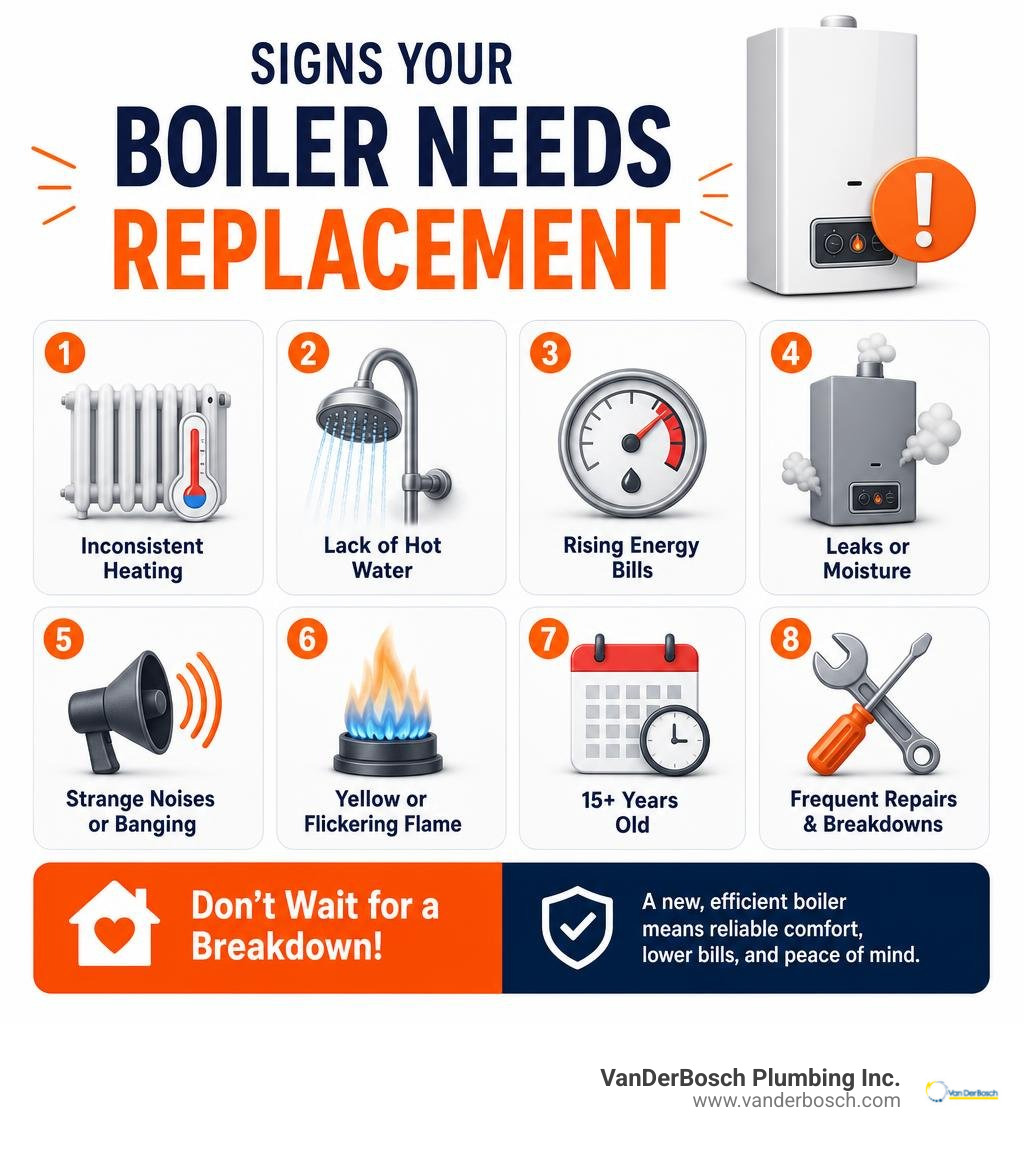
While boilers are incredibly durable, they don’t last forever. Most conventional cast iron boilers can last 20 to 35 years, but modern condensing boilers and combi units typically have a lifespan of 15 to 25 years. You should start planning for a replacement if you notice:
- Your boiler is over 15 years old and requiring frequent, costly repairs.
- Your monthly heating bills are steadily rising despite normal usage.
- You hear strange clunking, banging, or whistling noises (often indicating a failing pump or limescale buildup on the heat exchanger).
- The boiler frequently leaks water or struggles to maintain consistent pressure.
If you are experiencing any of these issues in the Chicago area, you can learn more about your options from the experts at Chicago Boiler Repair: Top Local Experts for Water Heater Repair.
What should homeowners consider when choosing a gas boiler installer?
Because gas boilers involve natural gas, high-voltage electricity, and high-pressure hot water, choosing the right contractor is the most important part of the process. Always look for:
- Proper Licensing and Insurance: Ensure the company is fully licensed to perform HVAC and plumbing work in Illinois and carries comprehensive liability insurance to protect your property.
- Local Experience: Choose a company familiar with local building codes and the unique heating challenges of Chicagoland homes.
- Transparent Pricing: A reputable installer should always provide an upfront, written estimate that clearly breaks down equipment, labor, permits, and disposal fees.
- Guarantees: Look for companies that stand behind their work with robust labor guarantees and satisfaction promises.
Conclusion: Secure Your Home’s Comfort
Investing in a new gas boiler installation is a significant decision, but it is one of the best ways to ensure your family’s comfort, safety, and financial peace of mind for decades to come. By choosing the right boiler type, working with licensed professionals, and keeping up with annual maintenance, you can enjoy quiet, reliable, and energy-efficient heat even during the harshest Chicago blizzards.
At VanDerBosch Plumbing Inc., we have spent decades keeping families warm across Cook County, from Elmhurst and Mount Prospect to Niles and Sauganash. We pride ourselves on transparent pricing with absolutely no hidden service charges, 24/7 emergency availability, and a 100% satisfaction guarantee on all our work. Our experienced, background-checked technicians are ready to help you find the perfect heating solution for your home.
If you live in Roselle and need immediate assistance, please visit our Roselle Boiler Services page. Ready to upgrade your home comfort or schedule your annual tune-up? Schedule your professional boiler service today and let our family take care of yours.